
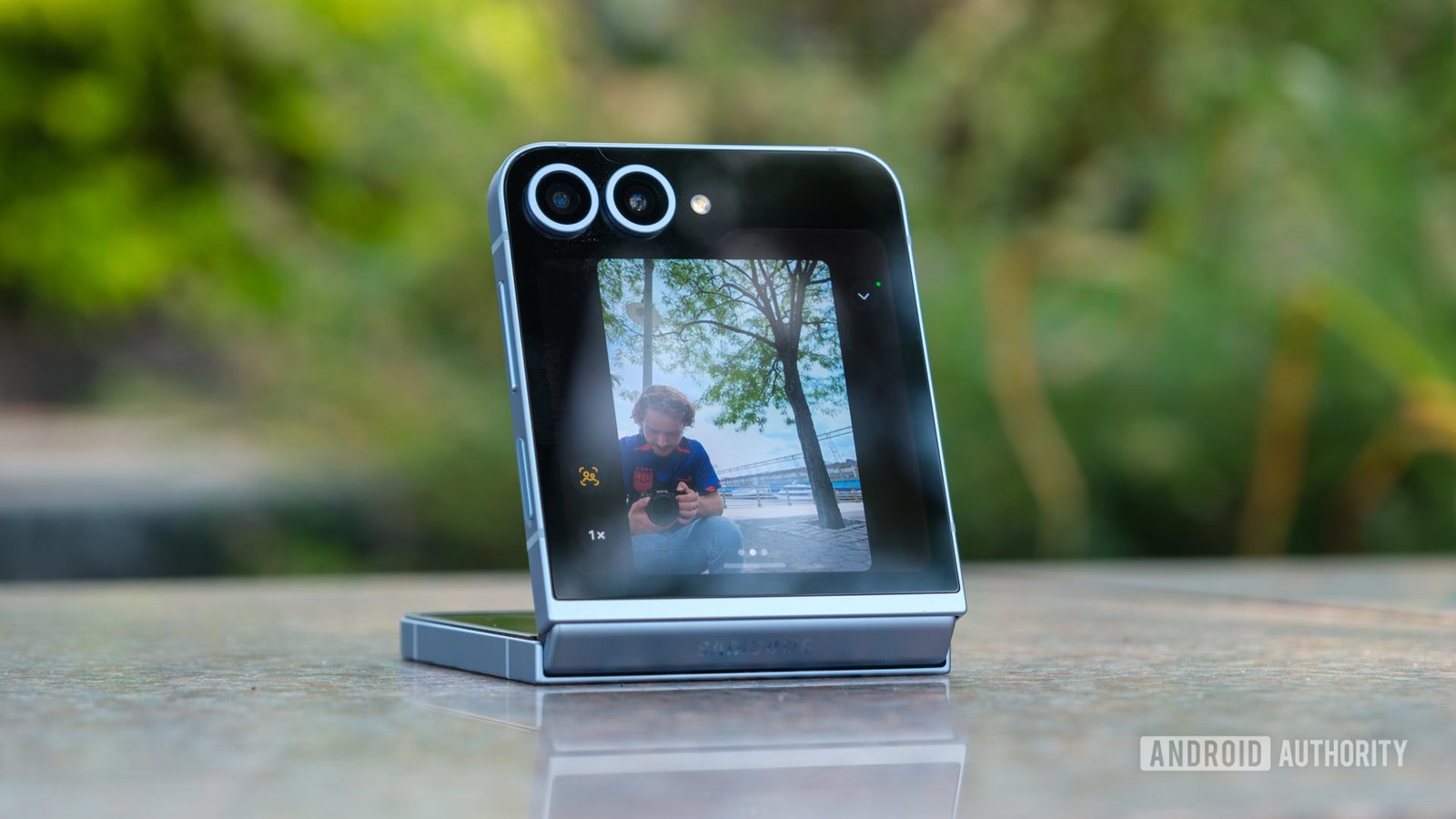
The Lens to the Future: Unpacking the Expected Camera Specifications of the Samsung Galaxy Z Flip 7
The foldable phone revolution, spearheaded by Samsung’s innovative Galaxy Z series, has continuously pushed the boundaries of smartphone design and functionality. While the Galaxy Z Fold lineup targets power users with tablet-like screens, the Galaxy Z Flip series has carved its niche as a fashion-forward, compact, and highly personal device. However, a consistent point of contention for both series, particularly the Z Flip, has been camera performance, which often lagged behind their S-series flagship counterparts.
As anticipation builds for the release of the Samsung Galaxy Z Flip 7, eyes are keenly fixed not just on its folding mechanism and processing power, but crucially, on its photographic capabilities. Will the Z Flip 7 finally bridge the camera gap, offering a truly uncompromised flagship experience in a compact foldable form factor? This comprehensive article delves deep into the expected camera specifications of the Samsung Galaxy Z Flip 7, exploring the hardware, software, and computational photography advancements that could redefine mobile photography for foldables.
Acknowledging the Baseline: The Z Flip’s Camera Journey So Far
To understand where the Z Flip 7 is headed, it’s essential to look at its predecessors. The Galaxy Z Flip series, up to the Z Flip 5 and expected Z Flip 6, has typically relied on a dual-camera setup on the rear: a 12MP main wide-angle sensor and a 12MP ultrawide sensor. The selfie camera, embedded in the internal display, has often been a 10MP sensor.
While these cameras are perfectly capable in well-lit conditions, offering decent dynamic range and color reproduction, they have faced criticism for several reasons:
- Low-light Performance: Smaller sensors and less advanced processing compared to S-series flagships meant struggles in dim environments, often leading to noisy or underexposed images.
- Lack of Telephoto: The absence of a dedicated telephoto lens significantly limited zoom capabilities, relying solely on digital zoom which degrades image quality.
- Overall Flagship Parity: For a device commanding a premium price, the camera system often felt a step behind Samsung’s own S-series or competitors’ top-tier devices.
- Selfie Camera Quality: The internal selfie camera, while functional, couldn’t compete with the primary rear sensors, limiting the quality of video calls or traditional selfies.
However, the Z Flip’s unique form factor also introduced novel photographic possibilities:
- Flex Mode: The ability to partially fold the phone allowed for hands-free photography, unique low-angle shots, and stable video recording without a tripod.
- Quick Shot: Using the larger cover screen as a viewfinder, users could utilize the superior main rear cameras for high-quality selfies, significantly mitigating the internal selfie camera’s shortcomings.
The Z Flip 7 is expected to build on these strengths while rigorously addressing the historical weaknesses.
The Heart of the System: Expected Rear Camera Specifications
The primary focus for the Z Flip 7’s camera upgrade will undoubtedly be its rear setup. Given Samsung’s recent advancements in sensor technology and its commitment to improving foldable cameras, we anticipate significant overhauls.
1. The Main Wide-Angle Sensor: A Leap Towards Flagship Dominance
This is where the most impactful upgrade is expected. Moving beyond the long-standing 12MP sensor, the Z Flip 7 is highly likely to adopt a higher-resolution sensor, bringing it closer to the S-series flagships.
-
Resolution: The most probable candidate is a 50-megapixel sensor. Samsung has widely deployed 50MP sensors (like the ISOCELL GN3 or potentially an even newer generation) in its premium devices, including the Galaxy S23/S24 series. This shift immediately brings several advantages:
- Pixel Binning: Utilizing quad-pixel binning (Tetra2Pixel technology), the 50MP sensor can combine data from four pixels into one large 2.0µm (effective) pixel, resulting in a 12.5MP output. This significantly enhances light gathering capabilities, leading to vastly improved low-light performance, reduced noise, and better dynamic range.
- Higher Detail: When shooting in full 50MP mode, users will have access to greater detail, allowing for more aggressive cropping and retaining sharpness.
- Improved Digital Zoom: With a higher native resolution, digital zoom (or sensor crop zoom) from the main sensor will inherently be of higher quality before noticeable degradation.
-
Sensor Size: To complement the higher resolution, an increase in physical sensor size is crucial. We could see a sensor size in the range of 1/1.56-inch to 1/1.3-inch. A larger sensor allows more light to hit the photodiodes, translating directly to better image quality, especially in challenging lighting conditions.
-
Aperture: While maintaining a wide aperture like f/1.8 is expected, subtle improvements in lens elements could lead to better light transmission and reduced optical aberrations.
-
Autofocus: Dual Pixel Pro Autofocus (or a similar advanced phase-detection autofocus system) is a given, ensuring lightning-fast and accurate focusing even in dynamic scenarios.
-
Optical Image Stabilization (OIS): OIS is indispensable for sharp photos and stable videos, especially in low light or with slight handshakes. An enhanced OIS system, potentially with a wider correction angle, could further improve stability.
2. The Ultrawide Sensor: Refinement and Functionality
While the ultrawide sensor might not see a dramatic megapixel bump, significant qualitative improvements are anticipated.
- Resolution: A 12-megapixel ultrawide sensor is likely to remain, offering a wide field of view (typically 120-123 degrees).
- Aperture: A wider aperture, possibly moving from f/2.2 to f/2.0 or f/1.8, would allow more light in, improving low-light performance for ultrawide shots.
- Lens Quality: Upgraded lens elements could reduce barrel distortion (the fisheye effect common with ultrawide lenses) and improve sharpness towards the edges of the frame.
- Autofocus (Crucial Addition): The most desired upgrade for the ultrawide lens would be the inclusion of autofocus. This not only ensures sharp ultrawide shots but also unlocks macro photography capabilities, allowing users to capture extreme close-ups with intricate detail. This feature has been a highlight on S-series phones and would be a welcome addition to the Z Flip.
3. The Telephoto Lens: The Game-Changer (or Continued Absence?)
This is perhaps the most debated and anticipated addition to the Z Flip 7’s camera array. The compact nature of the Z Flip has historically made it challenging to integrate a dedicated telephoto lens without significantly increasing the device’s thickness or compromising battery life.
-
The Argument for Inclusion:
- Flagship Expectation: True flagship phones, regardless of form factor, are increasingly expected to offer optical zoom.
- User Demand: Many users desire the versatility of optical zoom for portraits, distant subjects, and creative framing.
- Competitive Pressure: Other foldable manufacturers (like Google’s Pixel Fold or some Chinese brands) are beginning to incorporate telephoto lenses.
-
Expected Implementation (If Included):
- Optical Zoom: A 3x optical zoom lens is the most probable and practical implementation. This offers a meaningful magnification without requiring a complex periscope mechanism (which is thicker and harder to integrate).
- Resolution: A 10-megapixel or 12-megapixel sensor for the telephoto lens would be sufficient, paired with OIS for stability.
- Sensor Size: The sensor size would likely be smaller than the main sensor, perhaps around 1/3.9-inch or 1/3.5-inch.
-
The Alternative (If Not Included): If Samsung deems a dedicated telephoto lens still too challenging for the Z Flip 7, they would likely rely on the enhanced 50MP main sensor to provide "sensor crop zoom" or "in-sensor zoom." This leverages the high resolution of the main sensor to crop into the image, effectively providing a lossless 2x zoom without a separate lens. While effective, it doesn’t offer the same optical quality as a dedicated telephoto lens for higher magnifications.
The inclusion of a telephoto lens would undoubtedly elevate the Z Flip 7’s camera system to a true flagship tier, making it a more versatile photographic tool.
Front-Facing (Internal) Camera: Subtle but Important Improvements
The internal selfie camera on the Z Flip has often been overshadowed by the ability to use the main cameras with the cover screen. However, for video calls and traditional unfolding selfies, it remains crucial.
- Resolution: A 10-megapixel sensor is likely to remain, or potentially a jump to 12MP.
- Aperture: A slightly wider aperture (e.g., f/2.2 to f/2.0) would improve low-light performance.
- Focus: While most internal selfie cameras are fixed focus, an upgrade to autofocus would be a significant enhancement, ensuring sharper selfies at varying distances.
- Under-Display Camera (Highly Unlikely but Future Hope): While a groundbreaking feature, implementing an under-display camera that doesn’t compromise on quality is still a significant challenge. It’s highly unlikely for the Z Flip 7 but remains a long-term goal for bezel-less foldable displays.
The Brains Behind the Beauty: Computational Photography and AI
Modern smartphone cameras are as much about software and processing as they are about hardware. The Galaxy Z Flip 7 will leverage Samsung’s latest advancements in computational photography, powered by its cutting-edge processors.
- Processor & ISP/NPU: The Z Flip 7 will undoubtedly be powered by the latest flagship mobile processor, likely the Qualcomm Snapdragon 8 Gen 4 for Galaxy (or an equivalent Exynos chip in some regions). These chipsets feature highly advanced Image Signal Processors (ISPs) and Neural Processing Units (NPUs) specifically designed to handle complex image processing tasks at incredible speeds.
- Improved Nightography: Samsung’s signature low-light photography feature will see significant enhancements. Expect:
- Faster multi-frame processing for sharper, brighter night shots.
- More accurate noise reduction without sacrificing detail.
- Better color accuracy in challenging low-light scenarios.
- Enhanced astrophotography modes for capturing stars and celestial bodies.
- Semantic Segmentation & AI Object Enhancement: The NPU will be adept at identifying different elements in a scene (sky, skin, foliage, buildings) and applying targeted enhancements. This leads to more natural-looking HDR, better skin tones, and vibrant landscapes.
- AI Zoom & Detail Enhancement: Even without a dedicated telephoto, the improved main sensor combined with AI upscaling could deliver impressive digital zoom quality, preserving details that would typically be lost.
- Expert RAW & Pro Mode: These modes will continue to offer granular control for photography enthusiasts. Expert RAW will allow users to capture multi-frame RAW files for maximum editing flexibility, leveraging the full potential of the new sensors.
- Photo Remaster & Object Eraser: These popular AI editing tools are expected to be faster and more precise, allowing users to effortlessly refine their photos directly on the device.
- Flex Mode Enhancements: AI will play a role in making Flex Mode even more intuitive, perhaps with smarter auto-framing, gesture controls for hands-free shooting, and optimized UI layouts for various folded angles.
Video Recording Capabilities: Beyond Still Images
Video performance is an increasingly important aspect of smartphone cameras, and the Z Flip 7 is expected to make strides here too.
- Resolution & Frame Rates:
- 8K Video Recording: The 50MP main sensor will enable 8K video recording at 24fps or 30fps, offering incredibly detailed footage.
- 4K Video Recording: 4K at 60fps will be standard across all applicable lenses (main, ultrawide, and potentially telephoto), ensuring smooth and high-quality video.
- HDR Video: Support for HDR10+ or similar high dynamic range video formats will capture richer colors and better contrast.
- Stabilization: Enhanced Super Steady stabilization, combining OIS with advanced electronic image stabilization (EIS), will deliver gimbal-like smoothness for action shots and handheld recording.
- Audio Recording: Improved microphone quality and spatial audio recording capabilities will ensure that videos sound as good as they look.
- Portrait Video / Cinematic Video: Enhanced AI-powered bokeh for video, allowing for adjustable background blur, similar to cinematic modes on other flagships.
- Pro Video Mode: Comprehensive manual controls for white balance, ISO, shutter speed, and focus peaking for videographers.
The Z Flip’s Unique Camera Experience: Unmatched Versatility
Beyond raw specifications, the Z Flip’s form factor fundamentally changes how users interact with its cameras. The Z Flip 7 will further refine these unique experiences:
- Ultimate Selfie Machine: The ability to use the significantly upgraded main 50MP sensor for selfies via the large cover screen is a massive advantage. This means professional-grade selfies, group shots, and even vlogging capabilities without needing to unfold the phone.
- Hands-Free Creativity: Flex Mode allows for stable long exposures, unique low-angle shots, and convenient video calls without needing a separate stand. Imagine perfectly framed time-lapses or group photos where everyone is in the shot, without struggling to balance the phone.
- Quick Shots on the Go: The larger, more functional cover screen will enable quick, high-quality photos and videos without even opening the device, perfect for capturing fleeting moments.
- Compact Professional Tool: Despite its compact size, the Z Flip 7, with its enhanced camera system, could become a surprisingly capable tool for content creators and casual photographers alike, offering a blend of portability and photographic prowess.
The Competitive Landscape and Future Outlook
The camera improvements on the Z Flip 7 are not just about catching up but also about maintaining Samsung’s leadership in the foldable market. While other brands like Motorola (Razr series) and Google (Pixel Fold) are making strides, Samsung’s sheer scale, R&D capabilities, and ecosystem integration give it a significant edge.
The Z Flip 7’s camera system will still likely be differentiated from the absolute top-tier S-series Ultra models, which often boast larger sensors, more advanced zoom capabilities (like 10x periscope telephoto), and more dedicated camera features. However, the gap is expected to narrow considerably, making the Z Flip 7 a compelling choice for users who prioritize the foldable form factor without making a drastic compromise on camera quality.
Looking ahead, we might anticipate even larger sensors, variable aperture technology (though complex for compact devices), and further integration of AI for hyper-personalization of images. The dream of a truly invisible under-display camera with uncompromised quality for the internal screen also remains a long-term aspiration.
Conclusion: A New Era for Z Flip Photography
The Samsung Galaxy Z Flip 7 is poised to usher in a new era for foldable smartphone photography. By finally addressing the historical camera shortcomings with a significant upgrade to its main sensor, potentially adding a dedicated telephoto lens, and leveraging cutting-edge computational photography, Samsung aims to deliver a truly flagship-level camera experience in its iconic compact form factor.
The combination of advanced hardware, intelligent software, and the unique flexibility offered by the foldable design promises a versatile and powerful photographic tool. The Z Flip 7 won’t just be a phone that folds; it will be a camera that unfolds new possibilities, empowering users to capture their world with unprecedented quality and creativity. The anticipation for its reveal is not just about the device itself, but about the visual stories it will help millions of users tell.
