The Foldable Frontier: Samsung Galaxy Z Flip 7 vs. Z Flip 6 – An In-Depth Comparison
The foldable smartphone market continues its rapid evolution, with Samsung firmly at the helm, particularly in the clamshell form factor. Every year, enthusiasts and tech critics eagerly await the next iteration of the Galaxy Z Flip series, hoping for revolutionary advancements while appreciating the refined elegance it already offers. As the Samsung Galaxy Z Flip 7 looms on the horizon, the natural question arises: how will it stack up against its predecessor, the well-received Galaxy Z Flip 6?
This comprehensive article will delve deep into a head-to-head comparison of the Samsung Galaxy Z Flip 7 (based on informed predictions, leaks, and Samsung’s historical upgrade patterns) and the existing Galaxy Z Flip 6. We’ll explore every facet, from design nuances and display innovations to raw performance, camera capabilities, battery endurance, and the overall user experience, to help you determine which foldable masterpiece might be the right fit for your pocket and lifestyle.
1. Introduction: The Evolution of Elegance
Samsung’s Galaxy Z Flip series has carved a unique niche in the smartphone landscape. It’s not just a phone; it’s a fashion statement, a compact powerhouse, and a testament to modern engineering. The Z Flip 6, launched in 2024, built upon the solid foundation of its predecessors, offering refinements in design, improved durability, and enhanced performance. It solidified Samsung’s position as the market leader in foldable phones, making the clamshell form factor more accessible and appealing to a wider audience.
Now, as we anticipate the Z Flip 7 in 2025, the expectations are high. Will Samsung deliver a truly groundbreaking upgrade, or will it follow its typical iterative approach, focusing on refinement rather than revolution? This comparison aims to dissect the anticipated differences and similarities, providing a detailed outlook on what the Z Flip 7 might bring to the table and how it measures against the proven capabilities of the Z Flip 6.
2. Design and Build Quality: Subtle Refinements or a New Blueprint?
The core appeal of the Z Flip series lies in its compact, clamshell design. Both the Z Flip 6 and the anticipated Z Flip 7 share this fundamental characteristic, allowing them to fold into a pocketable square.
Galaxy Z Flip 6:
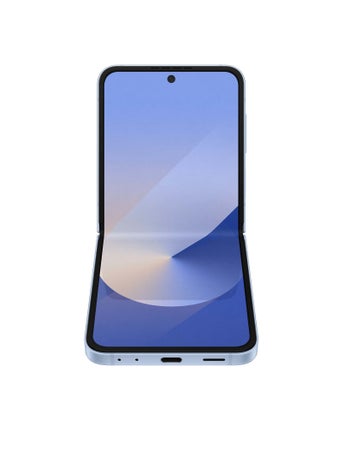
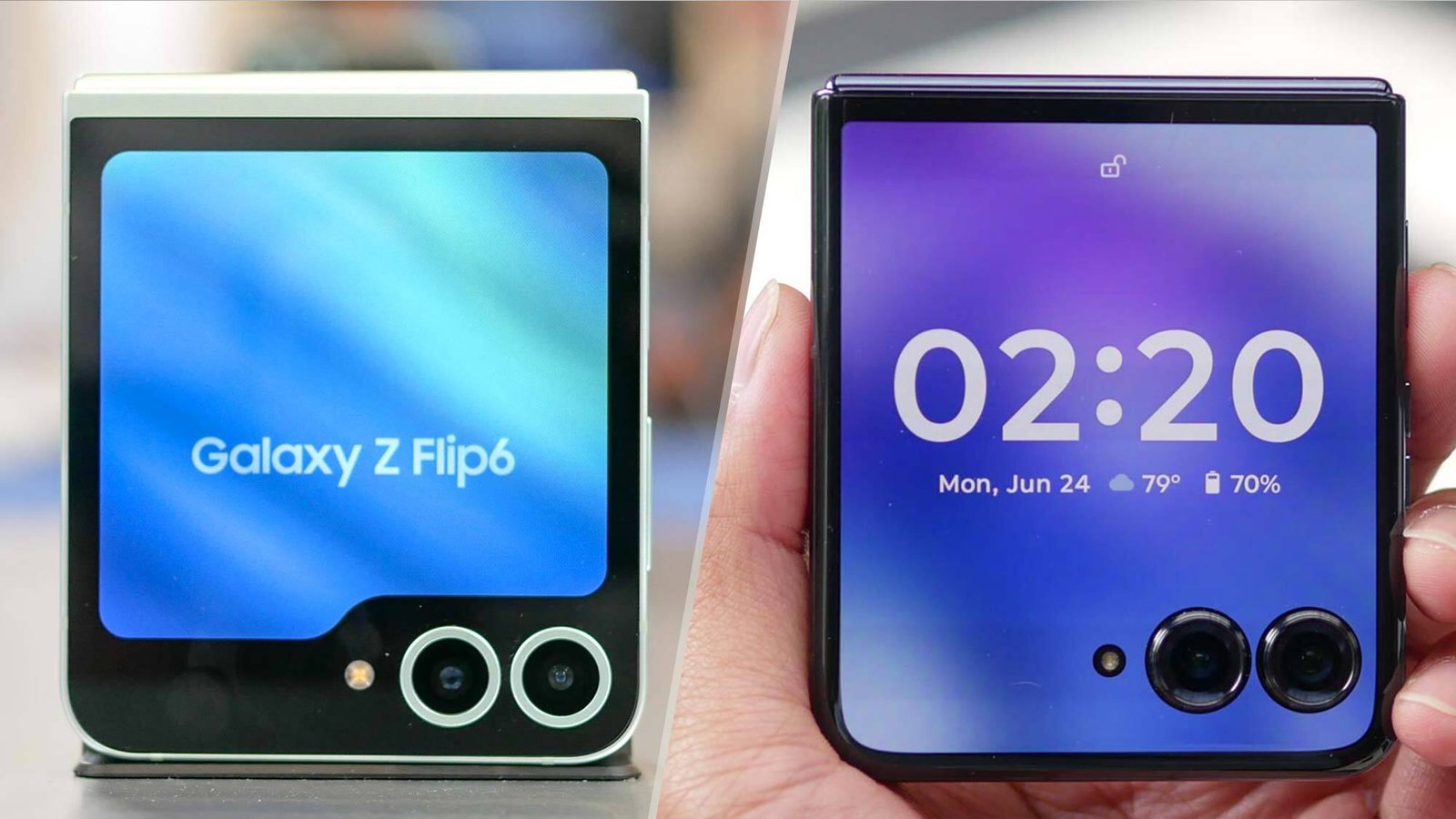
The Z Flip 6 largely retained the design language of the Z Flip 5, featuring a flat-edged aluminum frame, a sleek glass back, and the prominent "Flex Window" cover screen. It continued to use Samsung’s "Armor Aluminum" for the frame and Gorilla Glass Victus 2 (or potentially Gorilla Glass Armor for the outer display, as seen on some premium models) for enhanced scratch and drop resistance. The hinge mechanism was refined, aiming for even greater durability and a less noticeable crease than earlier generations. The device boasted an IPX8 water resistance rating, a crucial feature for foldables, allowing it to withstand submersion in fresh water.
Galaxy Z Flip 7 (Anticipated):
For the Z Flip 7, Samsung is expected to stick to the tried-and-true clamshell form factor, focusing on subtle refinements rather than a radical redesign. We anticipate:
- Hinge Evolution: While the Z Flip 6’s hinge was good, the Z Flip 7 could feature an even more robust and potentially flatter-folding hinge mechanism, further minimizing the crease on the main display. This could be a "waterdrop" hinge with even tighter tolerances.
- Materials: Expect a continuation of Armor Aluminum for the frame, possibly an upgraded version for enhanced rigidity. The external glass might see an upgrade to Gorilla Glass Armor on both the front and back for superior scratch resistance and durability.
- Dimensions and Weight: Samsung typically aims for thinner and lighter devices. While major changes are unlikely due to the battery and display tech, the Z Flip 7 might shave off a few millimeters or grams, making it feel even more premium and comfortable in hand.
- Colors: New, perhaps more vibrant or sophisticated color options are almost a certainty, catering to the Z Flip’s fashion-conscious audience.
- Durability: The IPX8 water resistance rating is likely to remain, and Samsung might even explore dust resistance (though this is notoriously difficult for foldables).
Initial Verdict: The Z Flip 7 is unlikely to revolutionize the design but will likely offer a more refined, durable, and perhaps marginally sleeker version of the already excellent Z Flip 6 chassis. The most significant design improvement would be a further minimized or invisible crease.
3. Displays: The Canvas of Innovation
The Z Flip’s dual-display setup – a large internal folding screen and a versatile external cover screen – is central to its identity.
Galaxy Z Flip 6:
- Main Display: The Z Flip 6 featured a 6.7-inch FHD+ (2640 x 1080 pixels) Dynamic AMOLED 2X display with a 120Hz adaptive refresh rate. It offered excellent color accuracy, vibrant visuals, and impressive brightness (up to 1600 nits peak). The Ultra Thin Glass (UTG) protected the screen, though a noticeable crease remained, albeit less prominent than older generations.
- Cover Screen (Flex Window): This was a major highlight of the Z Flip 6, boasting a substantial 3.4-inch Super AMOLED display (720 x 748 pixels). Its larger size allowed for more comprehensive interactions, including full QWERTY keyboard replies, expanded widget support, and a much more capable camera viewfinder.
Galaxy Z Flip 7 (Anticipated):
The Z Flip 7 is expected to push the boundaries of both displays, albeit incrementally.
- Main Display:
- Brightness: We could see a significant bump in peak brightness, possibly reaching 2000-2500 nits, making outdoor visibility even better.
- Crease Reduction: With hinge refinements, the crease might become even less noticeable or virtually invisible under normal viewing conditions, greatly enhancing the user experience.
- Resolution/Aspect Ratio: While FHD+ is generally sufficient for a phone of this size, a slight bump in pixel density or a subtle alteration to the aspect ratio for better content consumption isn’t entirely out of the question, though less likely than brightness improvements.
- UTG Enhancement: Further advancements in UTG technology could make the screen feel even more robust and smooth to the touch.
- Cover Screen (Flex Window):
- Size: There’s speculation about a marginal increase in the cover screen size, perhaps pushing towards 3.6-3.8 inches, offering even more screen real estate for widgets and app interactions.
- Functionality: Samsung will undoubtedly enhance the software capabilities of the Flex Window, potentially allowing more third-party apps to run natively, deeper customization options, and more interactive widgets.
- Refresh Rate: While the Z Flip 6’s cover screen was 60Hz, the Z Flip 7 might introduce a higher refresh rate (e.g., 90Hz or even 120Hz) for smoother animations and scrolling, making interactions feel even more fluid.
Initial Verdict: The Z Flip 7’s displays are expected to be superior, primarily through increased brightness, a less noticeable main screen crease, and a potentially larger, more functional, and smoother cover screen.
4. Performance: The Engine Under the Hood
Performance is a crucial differentiator, especially in the competitive smartphone market. The processor, RAM, and storage configurations dictate how smoothly the phone handles daily tasks, demanding apps, and graphic-intensive games.
Galaxy Z Flip 6:
The Z Flip 6 came equipped with the Qualcomm Snapdragon 8 Gen 2 for Galaxy chipset. This was a custom-tuned version of Qualcomm’s flagship processor, offering enhanced clock speeds compared to the standard Gen 2. Paired with 8GB or 12GB of RAM and storage options typically ranging from 256GB to 512GB (UFS 4.0), the Z Flip 6 delivered exceptional performance. It handled multitasking with ease, ran all modern games smoothly, and provided a fluid Android experience.
Galaxy Z Flip 7 (Anticipated):
The Z Flip 7 is almost guaranteed to feature the latest flagship processor, which, following Samsung’s pattern, will likely be the Qualcomm Snapdragon 8 Gen 3 for Galaxy. This chipset represents a significant generational leap, bringing:
- Raw Performance: Expect substantial improvements in CPU and GPU performance (20-30% or more), leading to faster app launches, smoother transitions, and even better gaming experiences.
- AI Capabilities: The Snapdragon 8 Gen 3 places a heavy emphasis on on-device AI processing (NPU). This will enable more advanced AI features directly on the device, such as real-time language translation, enhanced photo and video editing, and more intelligent system optimizations, aligning with Samsung’s "Galaxy AI" push.
- Efficiency: Despite increased power, the Gen 3 is also designed to be more power-efficient, potentially leading to better battery life even with similar battery capacities.
- RAM and Storage: We can expect a base of 12GB of RAM, with a potential option for 16GB on higher-tier models. Storage will likely remain 256GB, 512GB, and potentially 1TB, all utilizing the faster UFS 4.0 standard.
Initial Verdict: The Z Flip 7 will undoubtedly offer a significant performance upgrade over the Z Flip 6, primarily driven by the next-generation Snapdragon 8 Gen 3 for Galaxy. This will translate to a faster, more efficient, and more AI-capable device.
5. Camera System: Capturing Moments Creatively
The camera setup on the Z Flip series has always been good, but typically not at the cutting edge of Samsung’s S-series flagships. The emphasis is often on the unique shooting modes offered by the foldable form factor (FlexCam, Quick Shot).
Galaxy Z Flip 6:
The Z Flip 6 featured a dual-camera setup on the rear:
- Main Camera: A 50MP wide-angle sensor with OIS and Dual Pixel AF. This sensor provided excellent results in good lighting and decent low-light performance.
- Ultrawide Camera: A 12MP ultrawide sensor, offering a wide field of view for landscapes and group shots.
- Selfie Camera: A 10MP camera located in a punch-hole on the main display.
- FlexCam: A standout feature allowing the phone to be propped up at various angles for hands-free selfies, video calls, and creative shots. The large cover screen also served as an excellent viewfinder for high-quality main camera selfies.
Galaxy Z Flip 7 (Anticipated):
For the Z Flip 7, camera improvements are expected, though perhaps not a radical overhaul.
- Main Camera: Samsung might opt for a newer, larger sensor for the main camera, potentially increasing its light-gathering capabilities and dynamic range. While the megapixel count might remain similar (e.g., 50MP), the physical sensor size (e.g., 1/1.56-inch or larger) is crucial for image quality. Expect enhanced low-light performance (Nightography) and improved detail.
- Ultrawide Camera: The 12MP ultrawide might see minor improvements in lens quality or sensor, offering sharper images with less distortion.
- Selfie Camera: A bump to a 12MP or even 32MP selfie camera could be possible, or at least software enhancements for clearer video calls and selfies from the main screen.
- Computational Photography: The Snapdragon 8 Gen 3’s advanced ISP (Image Signal Processor) and NPU will play a significant role. This means smarter scene detection, improved HDR processing, better portrait mode edge detection, and more sophisticated video capabilities (e.g., enhanced stabilization, better low-light video).
- FlexCam Enhancements: Software updates will likely unlock more creative uses for FlexCam, possibly with new AI-powered shooting modes or gestures. The cover screen’s functionality as a viewfinder will continue to be a strong point.
Initial Verdict: While the Z Flip 7 might not get the absolute top-tier camera hardware found in the S Ultra series, it will almost certainly offer improved image quality, especially in challenging conditions, thanks to a combination of potentially upgraded sensors and significantly enhanced computational photography powered by the new chipset.
6. Battery Life and Charging: A Persistent Challenge?
Battery life has often been a point of contention for compact foldables, given the limited internal space.
Galaxy Z Flip 6:
The Z Flip 6 typically featured a dual-battery system with a combined capacity of around 3700mAh. While the Snapdragon 8 Gen 2 for Galaxy was efficient, real-world usage often meant a "one-day phone" for moderate users, sometimes requiring a top-up for heavy use. Charging speeds were decent but not class-leading, usually around 25W wired, 15W wireless, and 4.5W reverse wireless charging.
Galaxy Z Flip 7 (Anticipated):
This is one area where users consistently demand improvement.
- Battery Capacity: There’s always hope for a slight increase in battery capacity for the Z Flip 7. While a massive jump is unlikely due to form factor constraints, even a modest increase to 3800mAh or 3900mAh, combined with the power efficiency of the Snapdragon 8 Gen 3, could translate to noticeably better endurance.
- Charging Speeds: Samsung has been conservative with charging speeds, but the Z Flip 7 might see an upgrade to 45W wired charging, aligning it with other premium Samsung devices. Wireless charging speeds might also see a minor bump.
- Overall Endurance: The combination of a potentially larger battery and a more power-efficient chipset should result in the Z Flip 7 offering better all-day battery life, potentially extending into the next morning for lighter users.
Initial Verdict: The Z Flip 7 is expected to offer improved battery life, primarily through the power efficiency of its new processor and potentially a slight increase in battery capacity. Faster charging speeds would be a welcome, but less certain, upgrade.
7. Software and User Experience: Foldable Optimizations
Software is paramount, especially for foldables, where unique form factors demand specialized optimizations. Both devices run Samsung’s One UI on top of Android.
Galaxy Z Flip 6:
The Z Flip 6 launched with One UI 6.1, based on Android 14. It featured a host of foldable-specific optimizations:
- Flex Mode: Automatically adjusts UI elements when the phone is partially folded, ideal for watching videos, taking photos, or video calls.
- Multi-Active Window: Seamless multitasking with split-screen apps.
- Cover Screen Customization: Extensive options for widgets, watch faces, and quick settings on the Flex Window.
- Galaxy AI: Introduced features like Circle to Search, Chat Assist, Note Assist, and Photo Assist, leveraging on-device AI.
- Software Support: Samsung typically offers 7 years of OS updates and security patches for its flagship devices.
Galaxy Z Flip 7 (Anticipated):
The Z Flip 7 will launch with the latest version of One UI (likely One UI 6.1.1 or One UI 7.0) based on Android 15.
- Enhanced Flex Mode: Expect further refinements to Flex Mode, potentially with more apps natively supporting the folded posture and more intuitive controls.
- Deeper Cover Screen Integration: The larger and potentially higher refresh rate cover screen will undoubtedly come with expanded functionality, allowing more apps to run directly, more interactive notifications, and even more detailed widgets.
- Advanced Galaxy AI: With the Snapdragon 8 Gen 3’s NPU, the Z Flip 7 will likely showcase more advanced and integrated Galaxy AI features, making everyday tasks smarter and more efficient. This could include real-time voice translation during calls, more sophisticated generative AI for content creation, or personalized system optimizations.
- Continued Long-Term Support: Samsung will maintain its commitment to long-term software updates, ensuring the Z Flip 7 remains current and secure for many years.
Initial Verdict: The Z Flip 7 will build upon the Z Flip 6’s already excellent software experience, offering the latest Android version, a more polished One UI, and significantly more advanced Galaxy AI features, particularly leveraging the new NPU. The cover screen experience will also be more versatile.
8. Connectivity and Other Features
Both devices are premium flagships, so a robust set of connectivity options and essential features are a given.
Galaxy Z Flip 6:
- 5G (sub-6GHz and mmWave)
- Wi-Fi 6E
- Bluetooth 5.3
- NFC
- USB-C 3.2 Gen 1
- Stereo speakers
- Side-mounted fingerprint sensor
- Samsung Pay, Samsung Wallet
Galaxy Z Flip 7 (Anticipated):
- Wi-Fi 7: A likely upgrade, offering faster speeds and lower latency, especially beneficial in Wi-Fi 7-enabled environments.
- Bluetooth 5.4: Minor improvements in efficiency and stability over 5.3.
- USB-C 3.2 Gen 2 or higher: Potentially faster data transfer speeds.
- Improved Haptics: Samsung might refine the haptic feedback motor for a more premium and precise tactile experience.
- Enhanced Audio: While dedicated headphone jacks are long gone, Samsung might focus on optimizing speaker quality or integrating new audio technologies.
- Same Biometrics: The reliable side-mounted fingerprint sensor is likely to remain.
Initial Verdict: Connectivity upgrades (Wi-Fi 7) are the most anticipated changes, alongside minor refinements to other essential features.
9. Price and Value Proposition
The foldable market remains a premium segment, and the Z Flip series reflects that.
Galaxy Z Flip 6:
The Z Flip 6 launched at a price point typically around $999 USD for the base model (256GB), with higher storage configurations costing more. Its value proposition was strong, offering a premium foldable experience at a relatively more accessible price point than its Fold counterpart.
Galaxy Z Flip 7 (Anticipated):
Samsung typically tries to maintain similar pricing structures for its annual refreshes, though slight increases are not uncommon due to component costs and inflation.
- Launch Price: Expect the Z Flip 7 to launch at a similar price point, likely starting from $999 or $1049 USD for the base model.
- Promotions: Samsung is known for aggressive pre-order bonuses, trade-in offers, and bundled deals, which significantly enhance the actual value for early adopters.
Value Proposition:
- Z Flip 6: Post-Z Flip 7 launch, the Z Flip 6 will likely see price drops, making it an excellent value for those who want a capable foldable without needing the absolute latest performance or minor refinements. It will still receive years of software updates.
- Z Flip 7: Will cater to early adopters, those seeking the best performance, the latest AI features, and the most refined foldable experience Samsung can offer. The incremental improvements, especially in performance and potentially battery/camera, will justify its premium price for this segment.
Initial Verdict: The Z Flip 7 will command a similar premium price. The Z Flip 6 will become a more compelling value proposition after the Z Flip 7’s release, offering flagship-level features at a reduced cost.
10. Who Should Upgrade? Who Should Buy?
This is the ultimate question for potential buyers.
Reasons to Choose the Galaxy Z Flip 7:
- You demand the absolute latest performance: The Snapdragon 8 Gen 3 for Galaxy will offer a significant leap in speed and efficiency.
- You’re excited by advanced AI features: The Z Flip 7 will showcase Samsung’s latest Galaxy AI capabilities, heavily leveraging the new NPU.
- You prioritize the best possible battery life and charging: While not a massive leap, the Z Flip 7 is expected to offer better endurance and potentially faster charging.
- You want the most refined foldable experience: A potentially less noticeable crease, brighter displays, and more versatile cover screen functionality will enhance daily use.
- You are upgrading from a much older Z Flip (Z Flip 4 or earlier): The cumulative improvements will be substantial.
- You are buying your first foldable and want the best available.
Reasons to Stick with the Galaxy Z Flip 6 (or Buy it After Z Flip 7’s Launch):
- You are conscious of budget: The Z Flip 6 will likely see price drops, offering excellent value.
- You find its performance perfectly adequate: The Snapdragon 8 Gen 2 for Galaxy is still a powerhouse and will handle most tasks with ease for years to come.
- You’re satisfied with its camera performance: The Z Flip 6’s cameras are good, especially with FlexCam.
- You appreciate its current battery life: If it already gets you through the day, you might not need the marginal improvements.
- You already own a Z Flip 6: The incremental upgrades in the Z Flip 7 might not justify the cost of an immediate upgrade unless one specific feature (e.g., much better battery, completely invisible crease) is a deal-breaker for you.
- You prefer a tried-and-tested device: The Z Flip 6 has proven its reliability and performance.
11. Conclusion: Iteration, Refinement, and the Future of Foldables
The Samsung Galaxy Z Flip 7 is poised to be an impressive evolution of an already excellent foldable smartphone. It embodies Samsung’s strategy of iterative refinement, focusing on enhancing core experiences rather than radical reinvention. We anticipate significant gains in raw performance and AI capabilities, subtle but impactful improvements to the displays (especially the main screen’s crease and the cover screen’s functionality), and better overall battery endurance. The camera system will likely see computational boosts more than major hardware overhauls.
For current Z Flip 6 owners, the decision to upgrade will depend heavily on individual priorities. If cutting-edge performance, the very latest AI features, and marginal improvements in battery life and display refinement are paramount, the Z Flip 7 will be a compelling upgrade. However, if the Z Flip 6 already meets your needs, its continued excellent performance, solid camera, and upcoming price drops will make it a remarkably sensible and valuable choice for years to come.
Ultimately, both the Z Flip 6 and the Z Flip 7 represent the pinnacle of clamshell foldable technology, offering a unique blend of style, portability, and functionality. The Z Flip 7 will push the envelope further, solidifying Samsung’s leadership and making the foldable future even more enticing.