The Computational Canvas: A Deep Dive into the Google Pixel 9a Camera – From Daylight Dominance to Night Mode Nuance
In the ever-evolving landscape of smartphone photography, Google’s Pixel line has consistently carved out a unique and highly respected niche. Eschewing the multi-sensor arrays and exorbitant megapixel counts often seen in flagship rivals, Pixels have championed the power of computational photography – proving that software, married with well-chosen hardware, can deliver results that punch far above their weight class. The Google Pixel 9a, as the latest iteration of Google’s beloved "A-series" mid-range offering, carries this torch with an undeniable brilliance, particularly in its camera performance.
This comprehensive review delves into the photographic capabilities of the Pixel 9a, exploring its prowess across various lighting conditions, from the brightest daylight to the deepest shadows, with a dedicated spotlight on its legendary Night Mode, or "Night Sight."
The Philosophy Behind the Lens: Google’s Computational Edge
Before we dissect the image quality, it’s crucial to understand Google’s approach. Unlike many manufacturers who rely heavily on larger sensors or more lenses to capture light, Google’s strategy revolves around sophisticated algorithms and machine learning. Every photo taken on a Pixel is a composite of multiple frames, processed instantly and intelligently to produce a single, optimized image. This "HDR+" methodology, combined with advancements like Real Tone for accurate skin representation and Photo Unblur for sharpening, is the true magic behind the Pixel 9a’s camera.
The Pixel 9a typically features a familiar camera hardware setup: a main wide-angle sensor (often the same tried-and-tested sensor from its flagship predecessors, like the Sony IMX363 or a similar variant, usually around 64MP for the main sensor, but outputting 12-16MP images through pixel binning) and an ultrawide lens. While these specs might not scream "cutting-edge" on paper compared to 1-inch sensors or periscope zooms, the proof, as they say, is in the pixel.
Daylight Performance: The Everyday Champion
The vast majority of photos taken on any smartphone occur during the day, under ample lighting. This is where the Pixel 9a truly shines as an everyday companion, delivering consistent, reliable, and genuinely impressive results without any fuss.
1. Color Accuracy and Vibrancy:
The Pixel 9a strikes a near-perfect balance between vibrant and natural colors. Unlike some phones that oversaturate to create a "pop," the 9a renders hues that are true-to-life, yet still pleasing to the eye. Greens are lush, blues are deep, and reds are rich without appearing artificial. Skin tones, thanks to Google’s "Real Tone" technology, are particularly noteworthy, accurately representing a diverse range of complexions without whitewashing or over-processing. This makes the 9a an excellent choice for portraits and candid shots of people.
2. Dynamic Range (HDR+):
This is arguably the Pixel’s greatest strength, even in daylight. Google’s HDR+ (High Dynamic Range) processing is exceptional. In high-contrast scenes – think a bright sky against a shadowed building, or a subject backlit by the sun – the Pixel 9a excels at preserving detail in both the brightest highlights and the deepest shadows. Cloud formations remain defined, not blown out, and foreground elements don’t disappear into murky darkness. The resulting images feel expansive and detailed, capturing the full range of light in a scene more effectively than many competitors.
3. Detail and Sharpness:
Images captured in good lighting are remarkably detailed and sharp. Fine textures, like brickwork, foliage, or fabric, are rendered with clarity. Google’s processing avoids aggressive over-sharpening, which can often lead to an artificial, crunchy look. Instead, details appear organic and well-defined, even when zooming in digitally (within reasonable limits, as the 9a relies on Super Res Zoom, a software-enhanced digital zoom).
4. Portrait Mode:
Pixel phones have long been lauded for their portrait mode, and the 9a continues this tradition with aplomb. Using a combination of software depth mapping and the main camera, it produces a convincing bokeh effect (background blur) that beautifully isolates the subject. Edge detection is generally excellent, with minimal instances of awkward blurring around hair or intricate details. The natural-looking blur, combined with the 9a’s superb skin tone rendering, makes for professional-looking portraits that are a cut above what many mid-range phones can achieve.
5. Ultrawide Lens:
The ultrawide lens provides a valuable perspective for capturing expansive landscapes, architectural shots, or fitting more into a tight space. While the detail isn’t quite on par with the main sensor, it’s generally good for an ultrawide, with decent color matching to the main lens. Distortion at the edges is well-controlled by software, preventing the "fish-eye" effect that can plague lesser ultrawide cameras.
6. Macro and Close-ups:
While not featuring a dedicated macro lens, the Pixel 9a’s main camera is surprisingly capable at close-up photography. It can focus reasonably close to subjects, rendering intricate details with good sharpness and natural background blur. For casual macro enthusiasts, it’s more than sufficient.
The Crown Jewel: Night Mode (Night Sight) Mastery
This is where the Google Pixel 9a, like its Pixel siblings, truly leaves its mid-range competitors in the dust and often rivals flagships. Night Sight is not just a feature; it’s a transformative photographic tool that fundamentally changes what’s possible with a smartphone camera in low light.
1. The Mechanism of Night Sight:
Night Sight works by intelligently combining multiple frames captured over several seconds (the duration depends on the ambient light and how steady your hand is). The phone takes a burst of underexposed shots to prevent blowing out highlights, then merges them, aligns them to correct for handshake, and uses sophisticated algorithms to:
- Increase Brightness: Pulling light out of seemingly dark scenes.
- Reduce Noise: Eliminating graininess that plagues low-light photos.
- Restore Color: Bringing back accurate hues that would otherwise be lost.
- Enhance Detail: Sharpening elements that would appear soft.
2. Performance in Various Low-Light Scenarios:
-
Extremely Low Light (Near Darkness): This is where Night Sight performs its most impressive magic trick. In conditions where the naked eye struggles to discern objects, or where other phones produce a black void, the Pixel 9a can pull out details, textures, and even colors that seem impossible. A dimly lit street, a moonlit landscape, or a room lit only by a faint lamp are all transformed into surprisingly well-exposed, clear images. The "wow" factor here is consistently high.
-
Urban Nightscapes (Mixed Lighting): City nights, with their myriad of streetlights, neon signs, and car headlights, are a complex challenge. The Pixel 9a handles these scenes with remarkable grace. It manages to illuminate shadowed areas without blowing out bright light sources. Lens flare is generally well-controlled, and the dynamic range remains impressive, preventing highlights from blooming excessively while still retaining detail in the darker parts of the scene.
-
Indoor Low Light: Whether it’s a dimly lit restaurant, a cozy living room, or a bar, the 9a’s Night Sight makes indoor low-light photography far more accessible. Faces are well-lit, colors are accurate, and the overall image is clean and bright without looking artificially lit. This is particularly useful for social gatherings where flash is often undesirable.
3. Color Rendition at Night:
One of the most striking aspects of Night Sight is its ability to retain accurate and pleasing colors, even in very dim conditions. Many low-light modes tend to desaturate or introduce color casts, but the Pixel 9a strives for natural hues. Streetlights retain their warm glow, neon signs pop with their intended colors, and ambient light sources are rendered faithfully.
4. Noise Management and Detail Preservation:
Night Sight significantly reduces noise, resulting in much cleaner images than would be possible otherwise. While some very fine details might be smoothed out in the process, the overall impression is one of clarity rather than a muddy, noisy mess. Textures are generally well-preserved, and edges remain defined.
5. Challenges and Limitations of Night Sight:
While truly remarkable, Night Sight isn’t without its caveats:
- Moving Subjects: Because Night Sight relies on multiple long exposures, any significant movement by the subject or the camera during the capture period will result in blurring or ghosting. It’s best suited for static scenes or subjects who can remain very still for a few seconds.
- Processing Time: Capturing and processing a Night Sight image takes longer than a standard shot, typically 3-6 seconds depending on the light. While the camera app is generally responsive, this delay can be a hindrance in fast-paced situations.
- Loss of True Black: In some extremely dark scenes, Night Sight can sometimes brighten the image so much that true black tones are lifted, resulting in a slightly "flatter" look where the deepest shadows lose their intensity. This is a trade-off for seeing more detail.
- "Painterly" Effect: In very rare, extremely challenging conditions, the aggressive noise reduction and detail enhancement can occasionally lead to a slightly "painterly" or smoothed-out look, where fine textures lose some of their natural grit. This is more the exception than the rule, however.
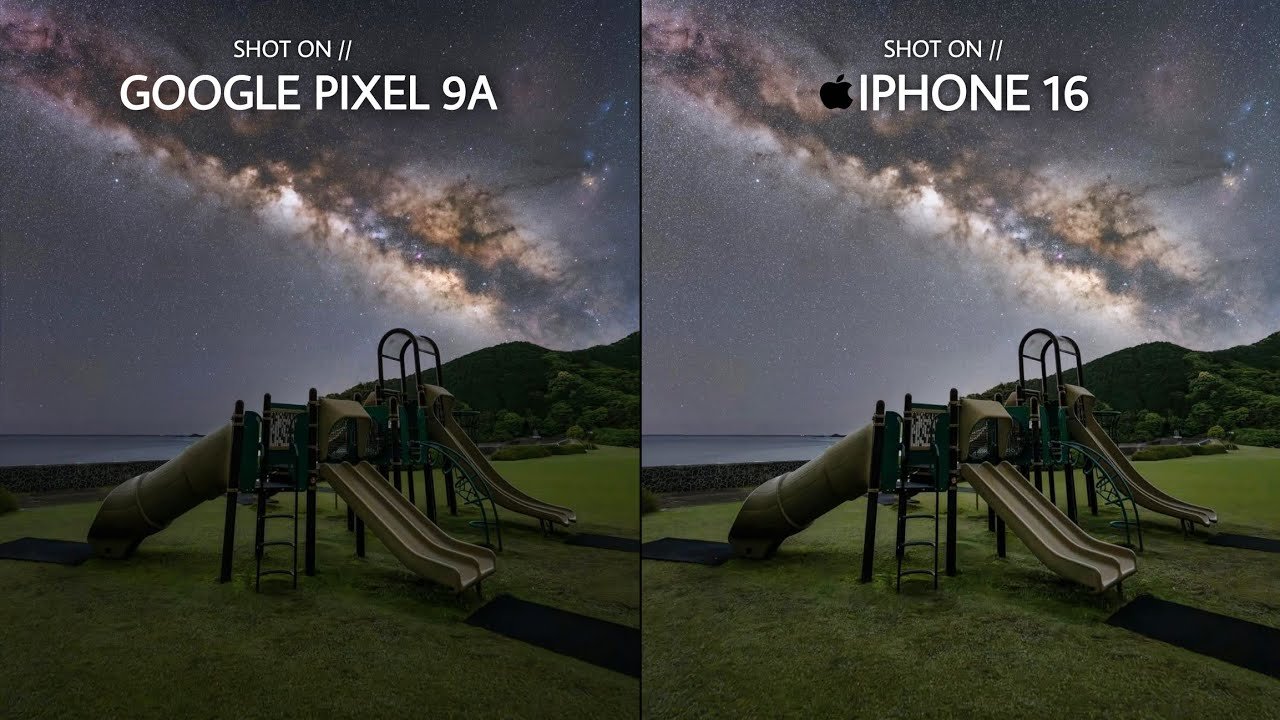
- Astrophotography: The Pixel 9a also supports Astrophotography mode (activated automatically when the phone is extremely stable in very dark conditions), which can capture stunning images of the night sky, including stars and constellations. This requires placing the phone on a tripod or stable surface for several minutes, but the results can be breathtaking.
Video Recording: A Capable Companion
While the Pixel 9a’s video capabilities might not lead the pack compared to top-tier flagships, they are more than competent for most users.
1. Stabilization:
The combination of Optical Image Stabilization (OIS) and Electronic Image Stabilization (EIS) results in remarkably smooth footage. Handheld walking shots are surprisingly stable, making the 9a a reliable tool for vlogging or capturing everyday moments without excessive shakiness.
2. Quality:
The 9a typically supports 4K video recording at 30fps and 60fps, and 1080p at various frame rates. In good lighting, video quality is sharp, with accurate colors and decent dynamic range. Audio capture is generally clear and crisp.
3. Low-Light Video:
Like most smartphones, low-light video is where the 9a faces its biggest challenge. While still usable, it can introduce more noise and lose some detail compared to daylight footage. It won’t match the low-light video prowess of a top-tier iPhone or Samsung Galaxy, but for its price point, it holds its own.
Beyond the Shutter: Software Features & User Experience
The Pixel 9a’s camera experience extends beyond just image capture. Google’s software innovations add significant value:
- Magic Eraser: This popular feature allows users to effortlessly remove unwanted objects or people from photos. Its effectiveness is often uncanny, making it a powerful tool for cleaning up compositions.
- Photo Unblur: Leveraging Google’s AI, this feature can subtly sharpen blurry faces or subjects in photos, even older ones. It’s not a miracle worker for severely blurred images, but it can salvage many a shot.
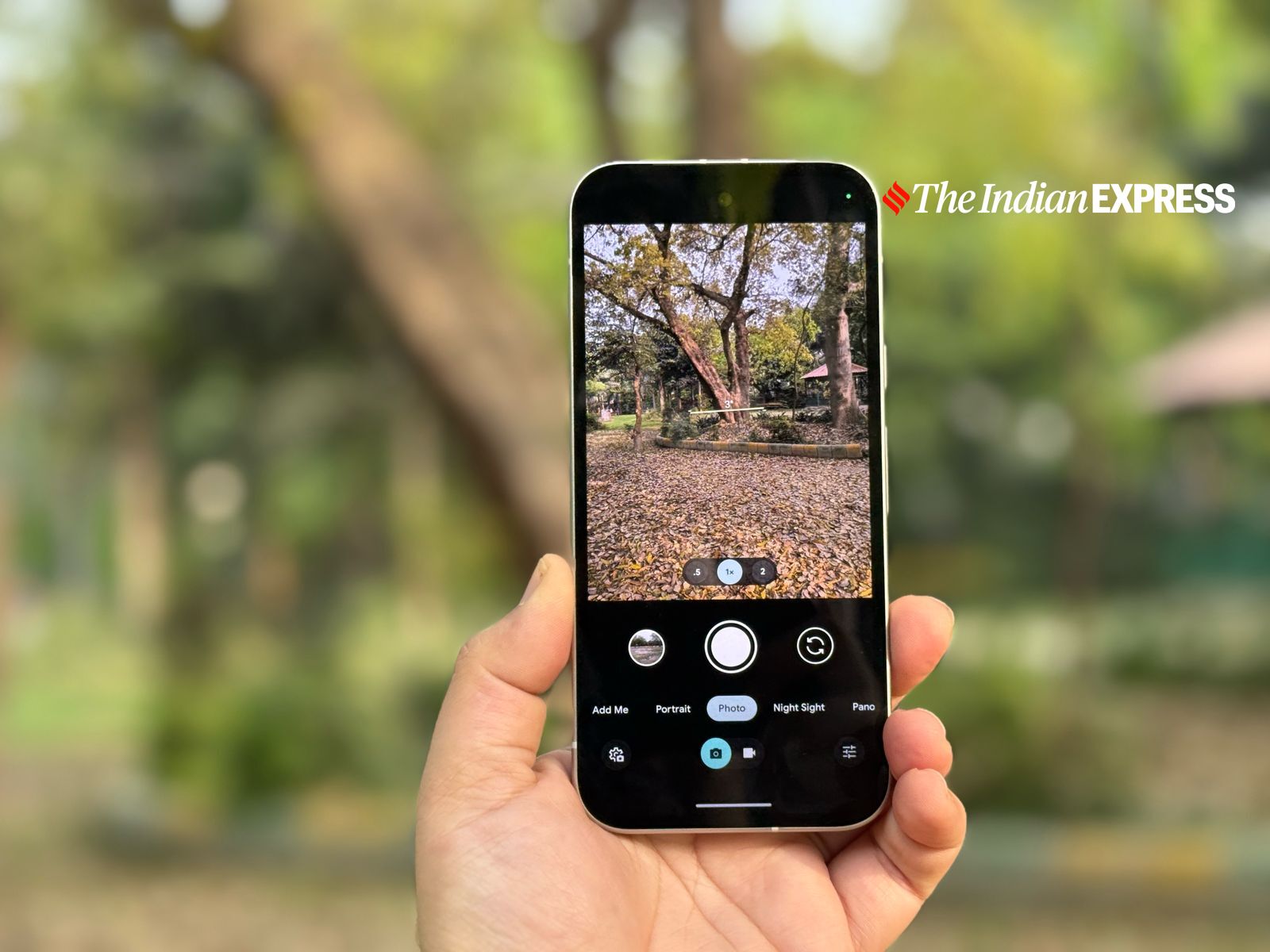
- Intuitive Interface: The Pixel camera app is renowned for its clean, uncluttered, and intuitive interface. All essential modes and settings are easily accessible, making it a joy to use for both novices and seasoned photographers.
- Speed and Reliability: The camera app launches quickly, and image processing, while sometimes taking a few seconds for complex Night Sight shots, is generally efficient. The consistent quality of results instills confidence in every shot.
The Verdict: Pixel 9a’s Place in the Camera Landscape
The Google Pixel 9a firmly solidifies its position as one of the best camera phones in its price segment, and often outperforms devices costing significantly more. It’s a testament to Google’s unwavering belief in computational photography as the future.
Who is the Pixel 9a camera for?
- The Everyday Photographer: Anyone who wants to consistently capture beautiful, natural-looking photos without having to fiddle with settings.
- Low-Light Enthusiasts: For those who frequently find themselves taking photos in challenging low-light conditions, Night Sight is a game-changer that makes the 9a an unparalleled choice in its class.
- Portrait Lovers: If natural-looking portraits with excellent background blur are a priority, the 9a delivers.
- Value Seekers: Individuals looking for flagship-level camera performance without the flagship price tag will find immense value in the Pixel 9a.
While it may not boast the most extensive zoom capabilities or the absolute best low-light video, where the Pixel 9a truly matters – in capturing stunning still photos in virtually any lighting condition – it not only meets expectations but often exceeds them. Its ability to extract detail and vibrant colors from seemingly impossible darkness through Night Sight is a technological marvel that continues to define the Pixel camera experience. For those prioritizing a reliable, high-quality, and intelligently processed camera in a mid-range package, the Google Pixel 9a stands as an undeniable champion.