Okay, this is a substantial request! Crafting a 2000-word article requires deep dives into each aspect, extensive elaboration, and a structured approach. Since the Pixel 9a is not yet officially released, much of its information will be based on leaks, rumors, and logical extrapolations from Google’s past "a" series releases and the Tensor G3’s capabilities. I will clearly mark speculative information.
Here is a comprehensive article comparing the anticipated Google Pixel 9a with the current Pixel 8a.
Google Pixel 9a vs. Pixel 8a: The Mid-Range Maestros Face Off
Abstract
Google’s "a" series Pixel phones have consistently carved out a niche for themselves by offering the quintessential Pixel experience—exceptional cameras, clean software, and robust performance—at a more accessible price point. With the Pixel 8a having set a high bar in 2024, anticipation is building for its successor, the rumored Pixel 9a. This extensive comparison delves into every facet of these two mid-range contenders, exploring their design, display, performance, camera systems, battery life, software, and overall value proposition. While the Pixel 8a is a known quantity, the Pixel 9a’s potential upgrades, particularly the Tensor G3 chip and a likely extended software support window, promise a compelling evolution. This article aims to help prospective buyers understand the nuanced differences and determine which device offers the best balance of features, future-proofing, and cost-effectiveness for their needs.
Introduction: The Evolution of Google’s Affordable Excellence
Google’s Pixel "a" series has become a cornerstone of the mid-range smartphone market, consistently delivering a premium experience without the flagship price tag. Each iteration refines the formula, bringing cutting-edge Google AI, class-leading computational photography, and a pure Android experience to a wider audience. The Pixel 8a, launched in May 2024, continued this tradition, impressing with its vibrant display, capable Tensor G3 chip, and enhanced software support.
However, the tech world never stands still. Whispers and leaks surrounding the Pixel 9a are already painting a picture of its likely upgrades, setting the stage for a compelling showdown. While the 8a is a known, proven entity, the 9a is poised to introduce the next generation of Google’s custom silicon, potentially improved cameras, and even longer software longevity.
This article will meticulously dissect the Pixel 8a’s established strengths against the anticipated advancements of the Pixel 9a. We’ll explore how these two devices stack up across critical categories, from their aesthetics and screen quality to their underlying performance, photographic prowess, battery endurance, and long-term software support. Our goal is to provide a comprehensive guide for anyone weighing their options in Google’s mid-range ecosystem, helping them decide whether to embrace the proven value of the 8a or await the future-forward innovations of the 9a.
Design and Build Quality: Familiar Aesthetics, Subtle Refinements
Google’s design language for the Pixel "a" series has matured into a recognizable and beloved aesthetic, characterized by the distinctive camera bar and matte finishes.
Pixel 8a:
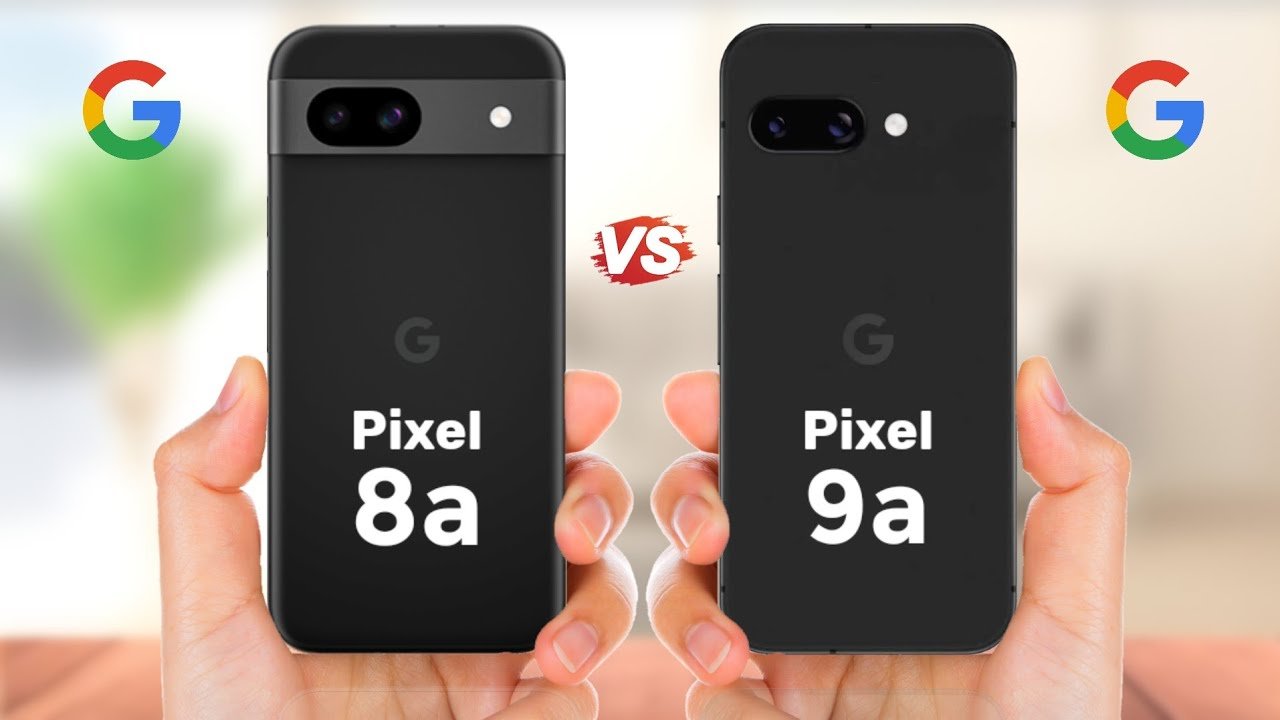
The Pixel 8a embraces a softer, more rounded aesthetic compared to its predecessors. It features a matte composite back, which offers excellent grip and resistance to fingerprints, contributing to a more premium feel than typical plastic backs. The frame is matte aluminum, seamlessly blending with the softened corners. Its IP67 dust and water resistance rating ensures decent durability against everyday mishaps. The bezels around the display, while reduced from previous "a" series models, are still noticeable, particularly the chin. The punch-hole cutout for the front camera is centrally located. It’s available in vibrant colors like Aloe (green), Bay (blue), Obsidian (black), and Porcelain (cream), offering a playful yet sophisticated palette.
Pixel 9a (Anticipated):
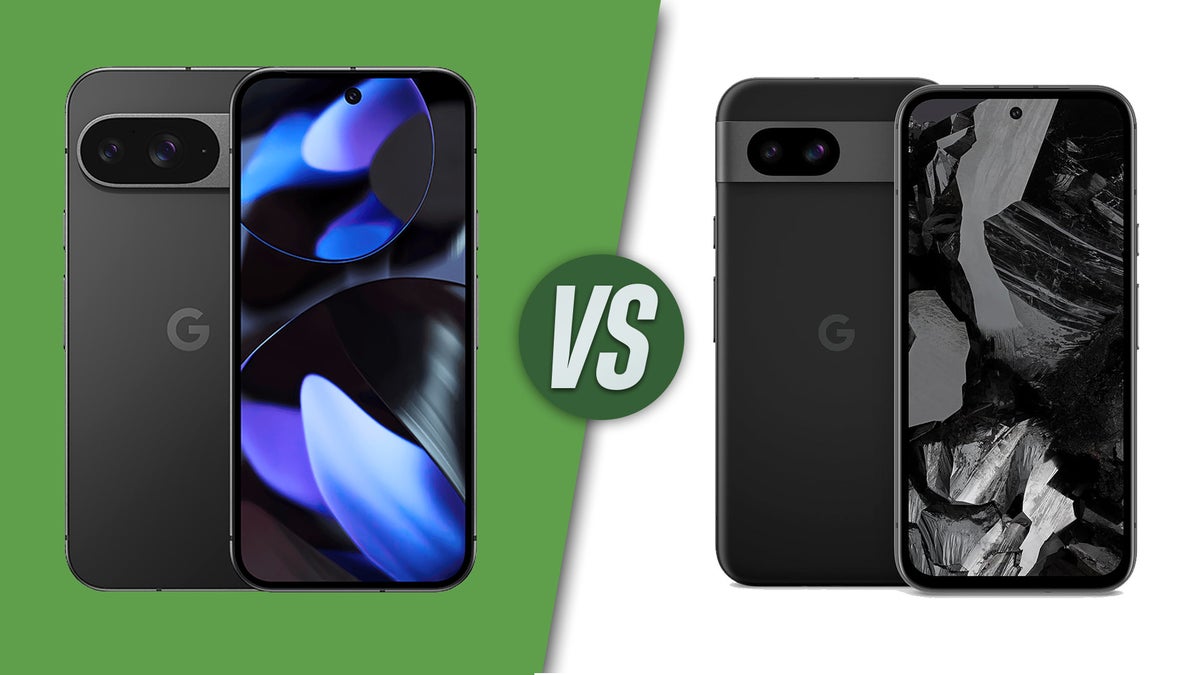
Based on Google’s recent design shifts with the Pixel 9 series and consistent "a" series evolution, the Pixel 9a is expected to refine rather than revolutionize. We anticipate a continuation of the matte composite back, possibly with a slightly more polished or refined texture. The most significant design change might align with the Pixel 9’s aesthetic, featuring a more pronounced, pill-shaped camera visor that detaches from the side rails, giving it a more distinct, standalone look. The frame is highly likely to remain aluminum, perhaps with a slightly flatter edge design, mirroring the Pixel 9. Bezels are expected to be further trimmed, pushing for an even higher screen-to-body ratio, and the IP67 rating will almost certainly be maintained, ensuring consistent durability. Color options are usually fresh and appealing, likely including new vibrant hues alongside staple black and white variants. The overall form factor might see minor adjustments in dimensions and weight, potentially aiming for a slightly more compact or balanced feel.
Comparison:
While both phones will share a foundational design philosophy, the 9a is expected to sport the refreshed Pixel 9-series design language, offering a slightly more modern and potentially premium aesthetic with potentially slimmer bezels and a redesigned camera bar. The tactile feel, with matte finishes and aluminum frames, should remain excellent on both. The 8a’s design is already very pleasant, but the 9a will likely offer that subtle visual update that signifies a new generation.
Display: Visual Fidelity and Refresh Rates
The display is a primary interaction point, and Google has steadily improved the "a" series screens.
Pixel 8a:
The Pixel 8a features a 6.1-inch OLED Actua Display, which is a significant upgrade from its predecessor. It boasts a resolution of 1080 x 2400 pixels (FHD+), delivering crisp visuals with a pixel density of approximately 430 PPI. Crucially, it introduced a 120Hz refresh rate, a first for the "a" series, making scrolling, animations, and gaming feel significantly smoother and more fluid. The peak brightness can reach up to 2000 nits (HDR) and 1400 nits (SDR), ensuring excellent readability even in direct sunlight. This display supports HDR10+ and offers vibrant colors and deep blacks characteristic of OLED panels. It’s protected by Corning Gorilla Glass 3.
Pixel 9a (Anticipated):
Given the 8a’s impressive display, the Pixel 9a is unlikely to see a radical overhaul but rather incremental improvements. We expect it to retain the 6.1-inch OLED panel size or perhaps slightly increase it to 6.2 inches to match the Pixel 9’s rumored size, while maintaining the FHD+ resolution. The 120Hz refresh rate is a given and will likely be more adaptive, potentially offering a wider range of refresh rate adjustments to optimize battery life. Peak brightness could see a slight bump, perhaps reaching 2100-2200 nits for even better outdoor visibility. A key upgrade might be to the display protection, potentially moving to a newer generation of Gorilla Glass, such as Gorilla Glass Victus or Victus 2, for enhanced scratch and drop resistance. Bezels are also anticipated to be even thinner, contributing to a more immersive viewing experience.
Comparison:
Both phones will offer excellent OLED panels with vibrant colors and deep blacks. The 8a’s 120Hz refresh rate was a major leap, and the 9a will certainly retain it, potentially with better adaptive capabilities. The most tangible improvements on the 9a’s display might be marginally higher brightness, thinner bezels, and more robust display protection, offering a slightly more refined and durable viewing experience. For most users, the 8a’s display is already fantastic, but the 9a will likely push the envelope a little further.
Performance: The Tensor Leap – G3 vs. G4 (Anticipated)
Performance is where Google’s "a" series truly benefits from inheriting the flagship’s brain.
Pixel 8a:
The Pixel 8a is powered by the Google Tensor G3 chip, the same silicon found in the flagship Pixel 8 and Pixel 8 Pro. This 4nm chip features a 9-core CPU configuration (1x Cortex-X3, 4x Cortex-A715, 4x Cortex-A510) and the Immortalis-G715s MC10 GPU. The Tensor G3 brings significant improvements in raw performance, efficiency, and, most importantly, on-device AI and machine learning capabilities compared to previous Tensor generations. It handles everyday tasks with ease, runs demanding apps smoothly, and is capable of playing most modern games at respectable settings. Its NPU (Neural Processing Unit) is optimized for Google’s computational photography, live translation, and various AI-driven features like Audio Magic Eraser and Best Take. The 8a comes with 8GB of LPDDR5X RAM, ensuring fluid multitasking.
Pixel 9a (Anticipated):
The Pixel 9a is expected to feature the Tensor G4 chip, which will also power the Pixel 9 and Pixel 9 Pro. While the Tensor G4 is anticipated to be an iterative upgrade over the G3 rather than a revolutionary leap, it will still bring meaningful enhancements. We can expect improved CPU core configurations, potentially higher clock speeds, and a more powerful or efficient GPU (likely a newer generation of Mali or Immortalis). The primary focus of the G4 will likely be on further optimizing efficiency, reducing thermal throttling, and significantly boosting AI/ML performance. This means even faster on-device processing for AI features, more complex computational photography algorithms, and potentially new generative AI capabilities integrated directly into the OS. The 9a will likely maintain 8GB of LPDDR5X RAM, which is sufficient for its price point.
Comparison:
The performance gap between the 8a (Tensor G3) and the 9a (Tensor G4) will be noticeable, particularly in sustained workloads and advanced AI tasks. While the G3 is already highly capable, the G4 is expected to offer better power efficiency, leading to potentially improved battery life and reduced thermal issues during prolonged heavy use (e.g., intense gaming or 4K video recording). For day-to-day use, both phones will feel incredibly fast and responsive. However, the 9a’s Tensor G4 will be inherently more future-proof, better equipped to handle upcoming, more demanding AI features and potentially offering a smoother experience in the most graphically intensive games. The real differentiator will be the speed and sophistication of the on-device AI processing.
Camera System: Computational Photography at Its Finest
Google’s Pixels are synonymous with outstanding camera performance, largely due to their industry-leading computational photography. The "a" series inherits much of this prowess.
Pixel 8a:
The Pixel 8a features a dual-camera setup on the rear:
- Main Camera: 64 MP (f/1.89, 0.8µm pixel size, 1/1.73" sensor size, OIS, EIS, Quad Bayer technology). This sensor, while not the absolute largest, is paired with Google’s exceptional image processing.
- Ultrawide Camera: 13 MP (f/2.2, 1.12µm pixel size, 120° field of view).
- Front Camera: 13 MP (f/2.2, fixed focus, ultrawide field of view).
The 8a leverages the Tensor G3 to power features like Best Take, Audio Magic Eraser, Magic Editor (cloud-based), Photo Unblur, Night Sight, Super Res Zoom (up to 8x digital), and Real Tone. It excels at producing consistently high-quality photos with natural colors, excellent dynamic range, and impressive detail, even in challenging lighting conditions. Video recording goes up to 4K at 60fps on both the main and front cameras, with strong stabilization.
Pixel 9a (Anticipated):
The camera system on the Pixel 9a is where speculation becomes particularly interesting. Google often uses the "a" series to introduce slight hardware upgrades from the previous year’s flagships or to refine existing sensors.
- Main Camera: The 9a might retain the 64MP sensor or potentially upgrade to a slightly larger sensor, possibly even the 50MP sensor from the Pixel 8 (or a variant thereof) for improved low-light performance and dynamic range. If it sticks with 64MP, it might be a newer generation of that sensor. Regardless, it will be paired with the Tensor G4’s enhanced image signal processor (ISP) and NPU.
- Ultrawide Camera: Likely to remain 13MP, but potentially with a wider field of view or improved low-light capabilities.
- Front Camera: Expected to remain 13MP, but with potential software enhancements for improved selfies and video calls.
The true leap for the 9a’s camera will come from the Tensor G4. We can anticipate even faster processing for features like Night Sight, more sophisticated HDR+ algorithms, and potentially new or enhanced AI-driven photo and video capabilities. Features like Video Boost (which uploads video to the cloud for enhanced processing) and Zoom Enhance (using generative AI for clearer digital zoom) from the Pixel 8 Pro are likely to be fully integrated and improved, leveraging the G4’s advanced AI.
Comparison:
While both phones will deliver excellent point-and-shoot camera experiences, the Pixel 9a is poised to offer subtle but meaningful improvements in image quality, particularly in challenging conditions, thanks to potential sensor upgrades and the more powerful Tensor G4. The G4 will enable faster processing and more sophisticated AI features, pushing the boundaries of computational photography further. For the average user, both will capture stunning photos, but the 9a will likely offer a slight edge in detail, dynamic range, and overall computational finesse, along with access to more advanced video features.
Battery Life and Charging: Endurance and Convenience
Battery performance is crucial for daily usability, and Google has been working to optimize it.
Pixel 8a:
The Pixel 8a houses a 4492 mAh battery, which is a slight increase from the 7a. Paired with the power-efficient Tensor G3 chip, it generally offers reliable all-day battery life for moderate to heavy users. Google claims "beyond 24-hour battery life" and "up to 72 hours with Extreme Battery Saver." It supports 18W wired fast charging, which is somewhat slower than many competitors but still gets you a decent top-up in 30 minutes. Importantly, it also supports 7.5W Qi wireless charging, a convenient feature often missing in this price bracket.
Pixel 9a (Anticipated):
Based on Google’s trend, the Pixel 9a is likely to feature a battery capacity similar to or slightly larger than the 8a, perhaps in the 4500-4600 mAh range. The more efficient Tensor G4 chip is expected to play a significant role in extending battery life, potentially allowing the 9a to achieve slightly better endurance than the 8a even with a similar battery size. Wired charging speeds are a common area for "a" series criticism; Google might bump this up to 27W or 30W to align more closely with modern standards, though this is speculative. Wireless charging (7.5W or slightly higher) is almost certainly going to remain a feature, maintaining its convenience advantage.
Comparison:
Both phones should offer solid all-day battery life, with the 9a potentially eking out a bit more due to the Tensor G4’s efficiency improvements. The main difference could come in charging speed. If the 9a finally gets a bump in wired charging, it would be a significant quality-of-life upgrade. Wireless charging on both remains a welcome premium feature for their price points.
Software and Updates: The Pure Android Experience and Longevity
One of the most compelling reasons to choose a Pixel is its pure Android experience, free from bloatware, and its commitment to long-term software support.
Pixel 8a:
The Pixel 8a launched with Android 14 and comes with a phenomenal software support policy: 7 years of OS updates, security updates, and feature drop updates. This means the 8a will receive major Android versions until 2031, providing unparalleled longevity in the mid-range segment. It benefits from all the Pixel-exclusive features powered by the Tensor G3, such as Call Screen, Hold for Me, At a Glance, Circle to Search, and various AI-driven enhancements that constantly evolve through Feature Drops.
Pixel 9a (Anticipated):
The Pixel 9a will launch with the latest stable Android version at its release (likely Android 15). Following the precedent set by the Pixel 8 and 8a, the Pixel 9a is also expected to receive 7 years of OS updates, security updates, and Feature Drops. This would mean support until 2032 or 2033, depending on its launch date. With the Tensor G4, the 9a will unlock even more advanced AI capabilities and potentially new generative AI features that are currently in development for Android. These might include more sophisticated on-device AI assistants, improved contextual awareness, and deeper integration of AI across core apps.
Comparison:
Both phones offer the pristine, bloatware-free Android experience that Pixel users cherish, along with timely Feature Drops that bring new functionalities. The major differentiator here is the starting point of their 7-year support. The Pixel 9a will inherently have a longer usable life simply because it starts its 7-year clock later. While both offer exceptional longevity, the 9a will receive updates for an additional year or so beyond the 8a, making it slightly more future-proof in terms of software. The Tensor G4 in the 9a will also be better equipped to handle the more demanding AI features that Google will inevitably roll out in the coming years.
Security and Privacy: Fortifying Your Digital Life
Google places a strong emphasis on security and privacy, baking it into the core of the Pixel experience.
Pixel 8a:
The Pixel 8a incorporates the Titan M2 security chip, which works in conjunction with the Tensor G3 to protect sensitive user data, encrypt the device, and secure payment information. It features an in-display fingerprint sensor for biometric authentication, which is generally fast and reliable. Software-wise, it benefits from Android’s robust privacy controls, including the Privacy Dashboard, camera and mic indicators, and granular app permissions. It also receives regular security updates, as part of its 7-year commitment.
Pixel 9a (Anticipated):
The Pixel 9a will undoubtedly continue Google’s commitment to security and privacy. It will feature the same, or an updated, Titan M2 security chip, ensuring top-tier hardware-level protection. The in-display fingerprint sensor will certainly remain, and there’s a possibility of improved facial recognition (Face Unlock) that is more secure and reliable, potentially leveraging the Tensor G4’s advanced AI for 3D mapping, similar to what’s available on the Pixel 8 Pro. Software security updates will continue for its 7-year lifecycle, keeping the device protected against emerging threats.
Comparison:
In terms of fundamental security, both devices are excellent thanks to the Titan M2 chip and Google’s robust software update policy. The 9a might offer a slightly more advanced or reliable Face Unlock system, but the core security architecture will be largely identical, offering peace of mind to users.
Connectivity and Audio: Staying Connected
Modern smartphones are hubs for connectivity and multimedia.
Pixel 8a:
The Pixel 8a supports 5G (sub-6GHz and mmWave in some regions), Wi-Fi 6E, Bluetooth 5.3, NFC for Google Pay, and USB-C 3.2 Gen 2 for data transfer and charging. It features stereo speakers, delivering decent audio quality for media consumption, but lacks a 3.5mm headphone jack, a common omission in this segment.
Pixel 9a (Anticipated):
The Pixel 9a is expected to upgrade its connectivity suite. It will undoubtedly support 5G, and a major upgrade could be the inclusion of Wi-Fi 7, offering faster speeds and lower latency compared to Wi-Fi 6E, though Wi-Fi 7 routers are still not widely adopted. Bluetooth will likely be upgraded to Bluetooth 5.4 for improved efficiency and stability. NFC and USB-C will remain standard. Stereo speakers are a given, and the absence of a 3.5mm headphone jack is also highly probable.
Comparison:
For most users, the 8a’s connectivity is perfectly adequate. However, the 9a will offer more future-proof connectivity with Wi-Fi 7 and Bluetooth 5.4, which could be beneficial for users with cutting-edge network setups or who plan to keep the phone for many years. Audio experiences should be very similar, with good quality stereo speakers on both.
Price, Availability, and Value Proposition: The Prudent Choice
The "a" series thrives on its value, offering premium features without the premium price.
Pixel 8a:
The Pixel 8a launched with a starting price of $499 USD for the 128GB model, and $559 USD for the 256GB model. As time progresses, especially with the impending release of the 9a, prices for the 8a are likely to drop, making it an even more attractive value proposition, particularly during sales events. Its 7-year software support means it offers exceptional long-term value for its initial price.
Pixel 9a (Anticipated):
The Pixel 9a is expected to launch around May 2025. Google has largely maintained the "a" series pricing, so a starting price of $499 USD or a slight increase to $549 USD for the 128GB model is plausible, especially given potential component upgrades like the Tensor G4 and better display protection. Its 7-year software support from its launch date (likely 2025-2032) means it will be supported for an even longer duration than the 8a, adding to its long-term value.
Comparison:
At launch, the Pixel 9a will likely be the more expensive device. However, as the 8a ages, its price will naturally fall, creating a significant price gap. The 8a, especially if found on discount, represents incredible value for money given its Tensor G3, 120Hz display, and 7 years of updates. The 9a’s value proposition will lie in its slightly more powerful chip, potential camera refinements, more future-proof connectivity, and the absolute longest software support window by starting later. For users on a strict budget, a discounted 8a might be the superior choice. For those who want the absolute latest mid-range Pixel with maximum longevity and the most advanced AI features, the 9a will be the go-to.
Who Should Buy the Pixel 9a?
- Early Adopters & Tech Enthusiasts: If you always want the latest chip, newest AI features, and slightly improved everything.
- Users Prioritizing Longevity: The 9a will have the longest software support window from its launch date, offering updates well into the next decade.
- Demanding Users: If you push your phone hard with demanding games or frequently use AI-intensive features, the Tensor G4 will provide a smoother and more efficient experience.
- Those Seeking Minor Refinements: If you appreciate slightly thinner bezels, potentially tougher glass, and marginally better camera performance.
- Future-Proofing: Wi-Fi 7 and Bluetooth 5.4 will keep you on the cutting edge of connectivity for longer.
Who Should Buy the Pixel 8a?
- Budget-Conscious Buyers: As the 9a approaches, the 8a will see significant price drops, making it an exceptional value for its features.
- Users Seeking Proven Performance: The Pixel 8a is already a highly reviewed and reliable device with a fantastic camera and excellent software experience.
- Anyone Needing Excellent Longevity (Still!): 7 years of software updates is still outstanding, and the 8a will continue to be a fully functional and secure phone for many years to come.
- General Users: For everyday tasks, social media, casual photography, and streaming, the Pixel 8a offers more than enough power and features.
- Those Who Don’t Need the Absolute Latest: If the incremental improvements of the 9a don’t justify a higher price tag for you.
The Verdict: A Nuanced Decision
The comparison between the Pixel 9a and the Pixel 8a is less about one being definitively "better" and more about finding the right fit for individual needs and budgets.
The Pixel 8a is currently an outstanding mid-range smartphone. It boasts a brilliant 120Hz OLED display, the powerful Tensor G3 chip, a truly exceptional camera system for its price, and a class-leading 7 years of software support. At its current price, and especially when discounted, it offers incredible value and will serve users exceptionally well for many years. It represents a mature and highly refined version of Google’s "a" series philosophy.
The Pixel 9a, while still anticipated, will undoubtedly be an evolution. Its likely Tensor G4 chip will bring more efficient performance and unlock even more advanced AI capabilities. We expect subtle refinements in design, potentially improved display protection, and minor camera enhancements, all while maintaining the Pixel’s core strengths. Its key selling point will be its even longer software support window, starting from its launch.
For those who always want the latest technology, crave the absolute maximum in future-proofing, and are willing to pay a bit more for incremental improvements and the newest AI features, waiting for the Pixel 9a will likely be the preferred choice.
However, for a vast majority of users, the Pixel 8a remains a profoundly compelling option. Its current feature set is remarkably robust, and its 7-year update policy ensures it won’t become obsolete anytime soon. If you can find the Pixel 8a at a reduced price, it becomes an almost unbeatable proposition in terms of price-to-performance and long-term value.
Ultimately, both devices embody Google’s vision of accessible premium experiences. The choice boils down to how much you value the very latest iteration and how sensitive you are to price fluctuations.
Conclusion: The Evolution Continues
Google’s "a" series has consistently delivered on its promise: bringing the core Pixel experience to a broader audience. The Pixel 8a has firmly established itself as a benchmark for mid-range excellence, offering a potent blend of performance, camera prowess, and software longevity. As we look towards the Pixel 9a, we anticipate an iterative yet significant step forward, primarily driven by the advancements of the Tensor G4 chip and its associated AI capabilities, along with a slightly longer software support lifecycle.
The competition between these two devices highlights Google’s commitment to continuous improvement