The Pixel Perfect Equation: A Full Review of the Google Pixel 9a in 2025
The smartphone landscape of 2025 is a hyper-competitive arena, saturated with sleek designs, computational photography marvels, and the ever-present hum of artificial intelligence. In this bustling environment, Google’s "a" series has consistently carved out a unique niche: delivering a significant slice of the flagship Pixel experience at a considerably more palatable price point. As we dive deep into the Google Pixel 9a, released in late 2024 and now a seasoned contender in early 2025, the question isn’t just "is it good?", but "does it still represent the ultimate mid-range value proposition amidst a sea of innovation?"
Having spent several months with the Pixel 9a as my daily driver, navigating everything from demanding work tasks to casual content consumption and intensive photography sessions, I can confidently assert that Google has once again refined its "a" series formula. The Pixel 9a isn’t just a budget-friendly alternative; it’s a testament to Google’s mature approach to smartphone design, software integration, and, most crucially, the pervasive and intelligent application of on-device AI.
Design and Ergonomics: Refined Familiarity
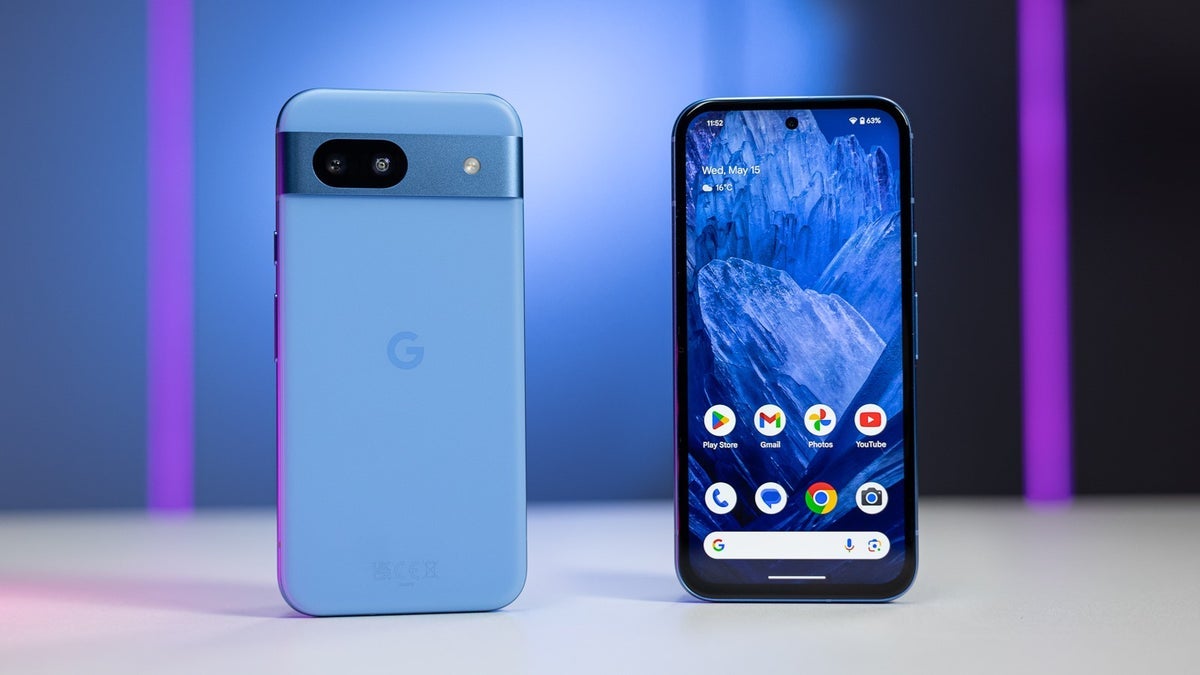
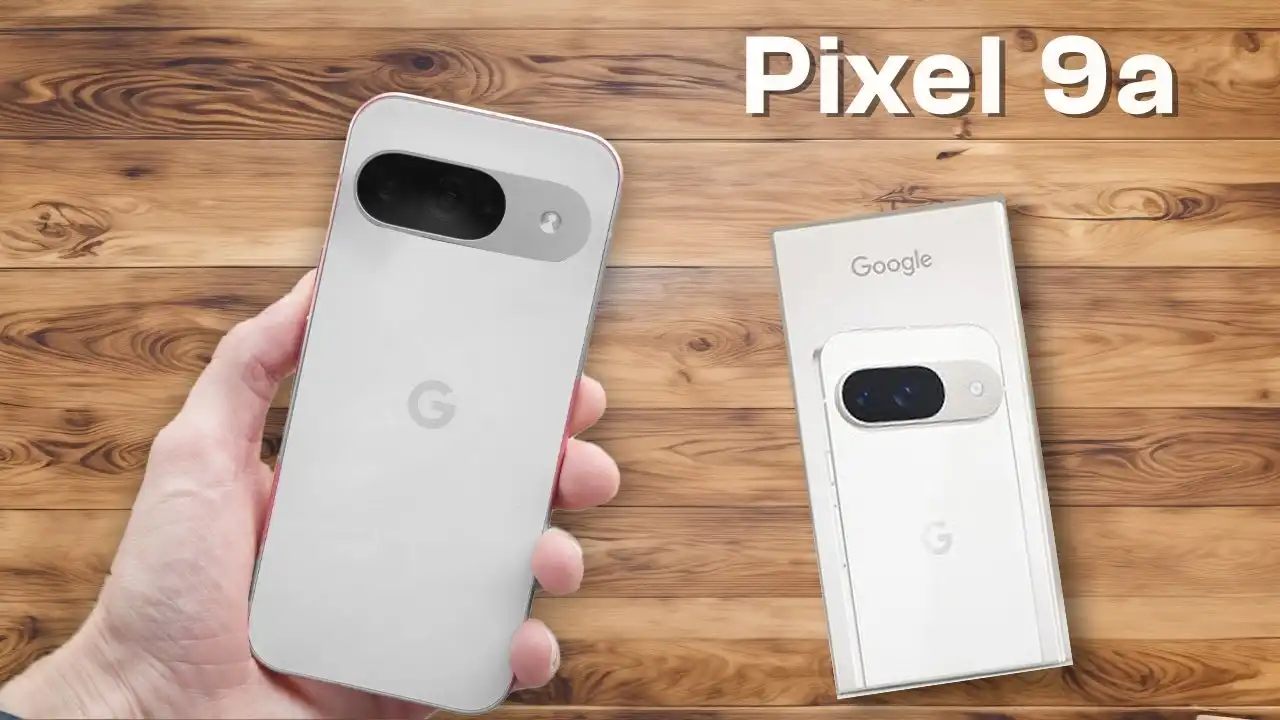
At first glance, the Pixel 9a immediately asserts its familial ties to the flagship Pixel 9 and 9 Pro. Gone are the days of the "a" series feeling like a significantly stripped-down version in terms of aesthetics. The 9a, by 2025 standards, still feels remarkably modern and premium for its price bracket. Google has stuck with the signature camera bar, now a refined metallic strip that seamlessly blends into the side frame, giving it a more cohesive and less obtrusive look than earlier iterations.
The rear panel, while still polycarbonate to keep costs down, boasts a matte finish that resists fingerprints remarkably well and offers a pleasant tactile feel. It’s a smart choice that mimics the frosted glass of its more expensive siblings without the fragility. The aluminum frame provides structural rigidity and a comfortable grip. At 6.1 inches, the display size strikes a near-perfect balance between immersive viewing and single-handed usability, a sweet spot that many users, including myself, appreciate in an era of increasingly gargantuan phones.
Weighing in at a comfortable 180 grams, the Pixel 9a feels substantial without being cumbersome. The bezels around the display, while not as razor-thin as on the Pixel 9 Pro, are commendably slim for a mid-range device in 2025, ensuring a high screen-to-body ratio that enhances the viewing experience. An IP67 rating for dust and water resistance further bolsters its everyday usability and durability, a feature that remains crucial for any phone intended for long-term use. In an age where phone designs can feel repetitive, the Pixel 9a’s subtle refinements make it a quietly elegant and practical device.
Display: A Window to Vibrancy and Smoothness
The display on the Pixel 9a is a standout feature, pushing the boundaries of what one expects from a mid-range smartphone. Google has equipped it with a 6.1-inch OLED panel boasting a Full HD+ resolution (1080 x 2400 pixels) and, crucially, a buttery-smooth 120Hz refresh rate. By 2025, 120Hz has become the expected standard, but its implementation here is exceptional. Scrolling, gaming, and navigating the UI are fluid and responsive, making the entire user experience feel significantly more premium.
The OLED technology ensures vibrant colors, deep blacks, and excellent contrast, making content consumption a joy. Whether you’re streaming the latest 4K content, browsing social media, or editing photos, the display renders everything with impressive accuracy and punch. Brightness levels are also commendable, peaking at around 1400 nits in high brightness mode, which is more than sufficient for comfortable outdoor viewing even under direct sunlight. Adaptive brightness is swift and accurate, adjusting seamlessly to varying light conditions.
While it lacks the LTPO technology found in flagships for dynamic refresh rate scaling, the fixed 120Hz still provides a consistently smooth experience without a significant hit to battery life, thanks to the efficiency of the Tensor G4 chip. For a phone in this price category, the Pixel 9a’s display sets a high bar, ensuring that visual interactions are always a pleasure.
Performance: The Tensor G4’s Mid-Range Mastery
At the heart of the Google Pixel 9a beats the Tensor G4 chip, the same silicon found in its more expensive Pixel 9 counterparts. This is perhaps the most significant differentiator for the "a" series in 2025. While other mid-range phones often rely on Qualcomm’s Snapdragon 7-series or MediaTek’s Dimensity chips, Google’s proprietary Tensor G4 offers a unique blend of raw power and, more importantly, unparalleled AI and machine learning capabilities.
In day-to-day usage, the Pixel 9a is remarkably swift and responsive. Apps launch instantly, multitasking is seamless, and transitions are fluid. The 8GB of LPDDR5X RAM ensures that even with numerous applications open in the background, the phone rarely stutters or lags. For gaming, the Tensor G4 handles graphically intensive titles like "Genshin Impact" and "Call of Duty: Mobile" at high settings with consistent frame rates, though it might warm up slightly during extended sessions – a common trait across many powerful smartphones.
However, the true strength of the Tensor G4 lies in its dedicated Tensor Processing Unit (TPU). This specialized hardware accelerates on-device AI tasks, which are now more integrated into the Android experience than ever before. Features like Live Translate, Call Screen, Magic Eraser, Photo Unblur, and Best Take are executed with astonishing speed and precision, often feeling instantaneous. By 2025, these AI capabilities are not just party tricks; they are fundamental enhancements to the user experience, and the Pixel 9a leverages them to their fullest. The efficiency of the G4 also contributes to stellar battery life, which we’ll discuss shortly. In an era where AI is becoming the new battleground, the Pixel 9a punches far above its weight class.
Camera System: Computational Photography at its Peak
This is where the Pixel 9a truly shines and where Google consistently differentiates its "a" series. While the hardware might not always boast the largest sensors or highest megapixel counts on paper compared to some rivals, Google’s computational photography prowess transforms good hardware into truly exceptional results. The Pixel 9a features a dual-camera setup on the rear: a 64MP primary sensor (likely an improved IMX787 or similar) with OIS, and a 13MP ultrawide lens. The front camera is a capable 13MP shooter.
Main Camera: Photos from the 64MP main sensor are consistently outstanding across a variety of lighting conditions. Google’s image processing delivers natural colors, excellent dynamic range, and impressive detail. Exposure is almost always spot-on, and noise reduction is handled intelligently, preserving textures without over-smoothing. Low-light performance, thanks to Night Sight, remains class-leading in this segment. The photos capture an incredible amount of light and detail, producing bright and usable images even in near darkness. Real Tone, Google’s commitment to accurately rendering diverse skin tones, continues to be a highlight, ensuring everyone looks their best.
Ultrawide Camera: The 13MP ultrawide lens offers a wide 120-degree field of view, perfect for landscapes, architectural shots, or fitting more into the frame. Distortion correction is excellent, and the color science closely matches that of the main sensor, ensuring a consistent look across your photos. While it doesn’t perform quite as well in extremely low light as the main sensor, it’s still highly capable for daytime and moderately lit scenes.
Front Camera: The 13MP front camera captures sharp, detailed selfies with good dynamic range. Portrait mode, both on the front and rear cameras, offers excellent subject separation and a pleasing, natural-looking bokeh, often outperforming phones twice its price.
AI-Powered Features (The Google Advantage in 2025):
The magic of the Pixel 9a’s camera extends far beyond its lenses. The Tensor G4 unlocks a suite of AI-driven features that are now more refined and integrated than ever:
- Magic Editor (Advanced): While not entirely new, the 9a’s Magic Editor, powered by Gemini Nano, allows for more sophisticated object manipulation, repositioning, and even generative fill, making complex edits surprisingly intuitive.
- Photo Unblur 2.0: Significant improvements in de-blurring photos, even those with considerable motion blur. It’s eerily effective.
- Best Take (Enhanced): For group photos, Best Take intelligently swaps faces from a burst of shots to ensure everyone has their eyes open and is smiling. The 2025 version is even more seamless and accurate.
- Audio Magic Eraser: For video, this feature intelligently isolates and reduces distracting background noises, allowing dialogue or important sounds to stand out.
- Video Boost & Night Sight Video: These features, which process videos in the cloud for enhanced dynamic range and low-light performance, continue to produce stunning results, making the 9a a surprisingly capable video recorder for casual users. The on-device capabilities for real-time stabilization and color correction are also top-tier.
In essence, the Pixel 9a’s camera isn’t just about taking good pictures; it’s about providing a comprehensive, intelligent photography experience that simplifies complex tasks and consistently delivers share-worthy results. For the price, it’s arguably the best camera phone on the market in 2025.
Software and AI: Android 16 and Beyond
Running on Android 16 out of the box, the Pixel 9a offers the purest, most unadulterated Android experience available. Google’s vision for Android is clean, intuitive, and remarkably free of bloatware. The interface is fluid, the animations are smooth, and the overall user experience is simply delightful.
However, the real power of the Pixel 9a’s software lies in its deep integration with Google’s AI ecosystem. By 2025, on-device AI, powered by Gemini Nano, has become pervasive.
- Contextual Intelligence: The Pixel 9a learns your habits, anticipating your needs. It can suggest relevant apps based on your location or time of day, intelligently manage notifications, and even predict your next action.
- Enhanced Call Screening: The AI-powered Call Screen is even smarter, transcribing calls in real-time with greater accuracy and offering more nuanced responses for screening spam.
- Summarization and Transcription: Gemini Nano allows for on-device summarization of long articles, web pages, or even recorded conversations, and real-time transcription of audio with impressive accuracy, all without sending data to the cloud.
- Adaptive Connectivity: The phone intelligently switches between Wi-Fi and cellular, and optimizes network usage based on your activities, ensuring stable connections and maximizing battery life.
- Privacy Dashboard & Controls: Google continues to emphasize user privacy, with robust controls and a transparent privacy dashboard that clearly shows app permissions and data usage.
Crucially, Google promises 7 years of software and security updates for the Pixel 9a, mirroring its flagship siblings. This commitment to longevity is a game-changer in the mid-range segment, ensuring that the 9a remains secure, up-to-date, and feature-rich well into the next decade. This makes the Pixel 9a an incredibly sensible long-term investment.
Battery Life and Charging: Enduring Power
Battery life on the Pixel 9a is a pleasant surprise. Equipped with a 4500mAh cell, the efficient Tensor G4 chip and optimized Android 16 software contribute to excellent endurance. On typical usage days involving browsing, social media, photography, streaming, and some light gaming, I consistently achieved a full day of use with 20-30% battery remaining before bedtime. Heavier users might need a top-up in the late evening, but for most, it’s a solid one-day phone. Screen-on time regularly hovers around 7-8 hours, which is commendable for a device of this size and capability.
Charging speeds, while not market-leading, are perfectly adequate. The Pixel 9a supports 27W wired charging, which can take the phone from 0 to 50% in roughly 30 minutes, and a full charge in just over an hour. It also supports 15W wireless charging, a convenient feature that is still somewhat rare in this price bracket in 2025, along with reverse wireless charging (Power Share) for accessories. Google’s Adaptive Charging feature also intelligently learns your charging habits to prolong battery health, an important consideration for a phone designed to last for years.
Audio, Haptics, and Connectivity: Refined Essentials
The Pixel 9a features stereo speakers that produce surprisingly rich and clear audio for media consumption and calls. While they won’t rival dedicated Bluetooth speakers, they are more than adequate for casual listening and offer good spatial separation. Call quality is excellent, with clear voice transmission and reception even in noisy environments, thanks to advanced noise cancellation algorithms.
Haptics, often overlooked, are a delight on the Pixel 9a. The vibration motor provides crisp, precise feedback for typing, notifications, and system interactions, adding a premium feel that enhances the overall user experience.
Connectivity is comprehensive, including 5G support for blazing-fast mobile data, Wi-Fi 7 for future-proofed wireless networking, Bluetooth 5.4, NFC for contactless payments, and a USB-C 3.2 port for fast data transfer and charging. The in-display fingerprint sensor is fast and accurate, and face unlock, while not as secure as the fingerprint reader, works reliably in most lighting conditions.
The Pixel 9a in 2025: The Ultimate Mid-Range Value?
In the ever-evolving smartphone market of 2025, the Google Pixel 9a stands as a beacon of intelligent design and exceptional value. It doesn’t aim to be the most powerful, the most luxurious, or the most innovative in every single metric. Instead, it meticulously crafts a holistic user experience that prioritizes the things that matter most to the vast majority of users: an exceptional camera, smooth and intelligent software, reliable performance, long-lasting battery life, and a commitment to longevity through software updates.
Pros:
- Class-leading Camera: Unbeatable computational photography for its price, with powerful AI features.
- Pure Android 16 Experience: Clean, intuitive, and deeply integrated with Google’s AI.
- Tensor G4 Performance: Smooth, responsive, and exceptional for on-device AI tasks.
- Long Software Support: 7 years of updates ensures remarkable longevity.
- Vibrant 120Hz OLED Display: Excellent for all types of content.
- Solid Battery Life: Easily lasts a full day for most users.
- Premium Design & Build: IP67 rating and refined aesthetics.
- Wireless Charging: A welcome addition in this segment.
Cons:
- Charging Speed: While adequate, not as fast as some competitors.
- No Telephoto Lens: Still relies on digital zoom for distant subjects.
- Polycarbonate Back: While durable, it’s not glass. (Minor gripe for the price)
- No Headphone Jack: A recurring lament for some users.
Conclusion: The Smart Choice
The Google Pixel 9a in 2025 is more than just a mid-range phone; it’s a statement. It proves that you don’t need to break the bank to own a device that excels in the areas that truly define the modern smartphone experience. For anyone seeking a fantastic camera, a fluid and intelligent software experience, and the peace of mind that comes with years of guaranteed updates, the Pixel 9a is not just a strong contender – it’s arguably the smartest choice available.
It’s the phone for the discerning user who values substance over superfluous flash, intelligent features over raw, often unused, power. Google has perfected the "a" series equation, delivering a device that will comfortably serve its owners for years to come, consistently punching above its weight and redefining expectations for what a mid-range smartphone can truly be. The Pixel 9a is, without a doubt, a resounding success.